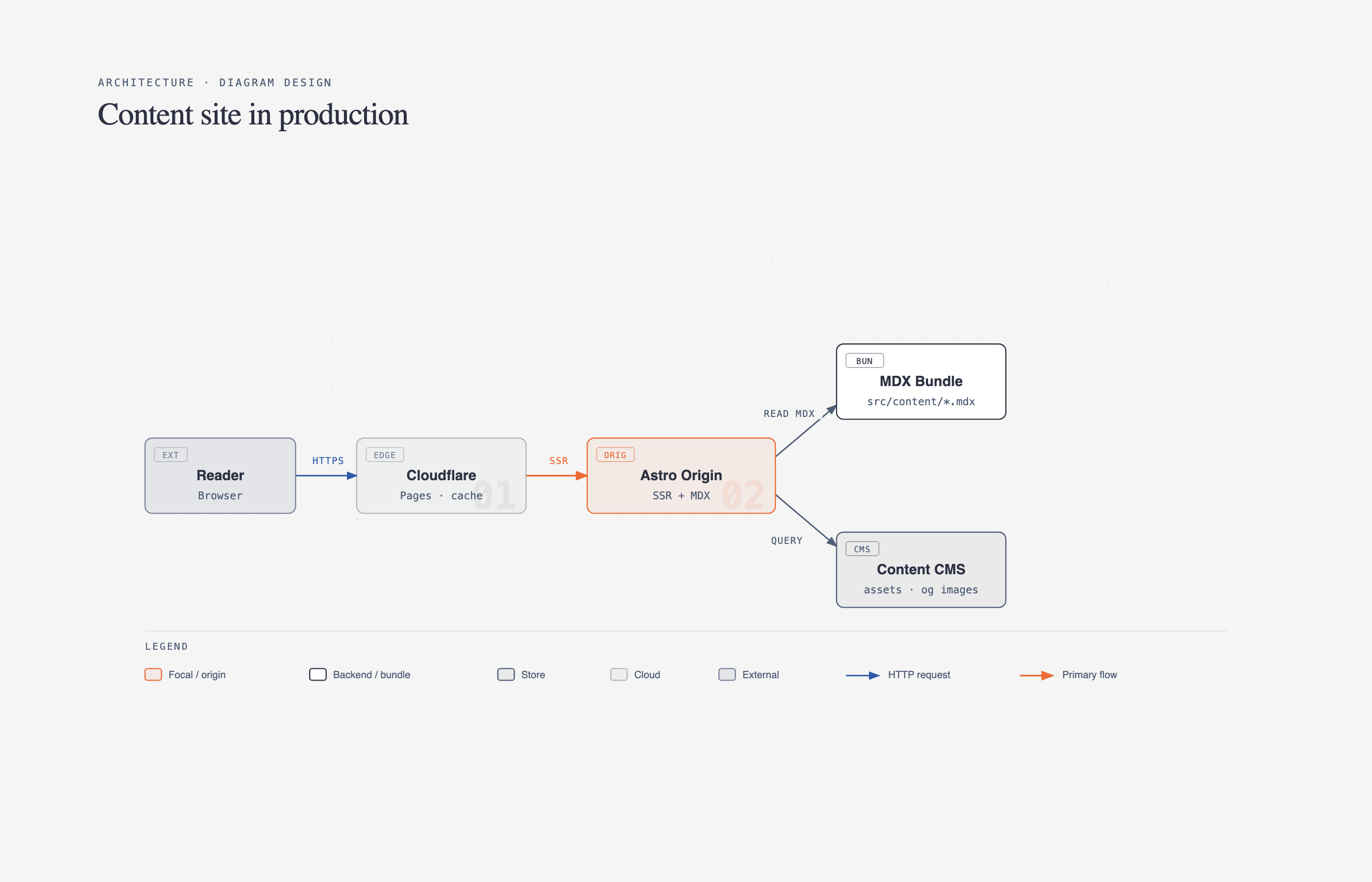
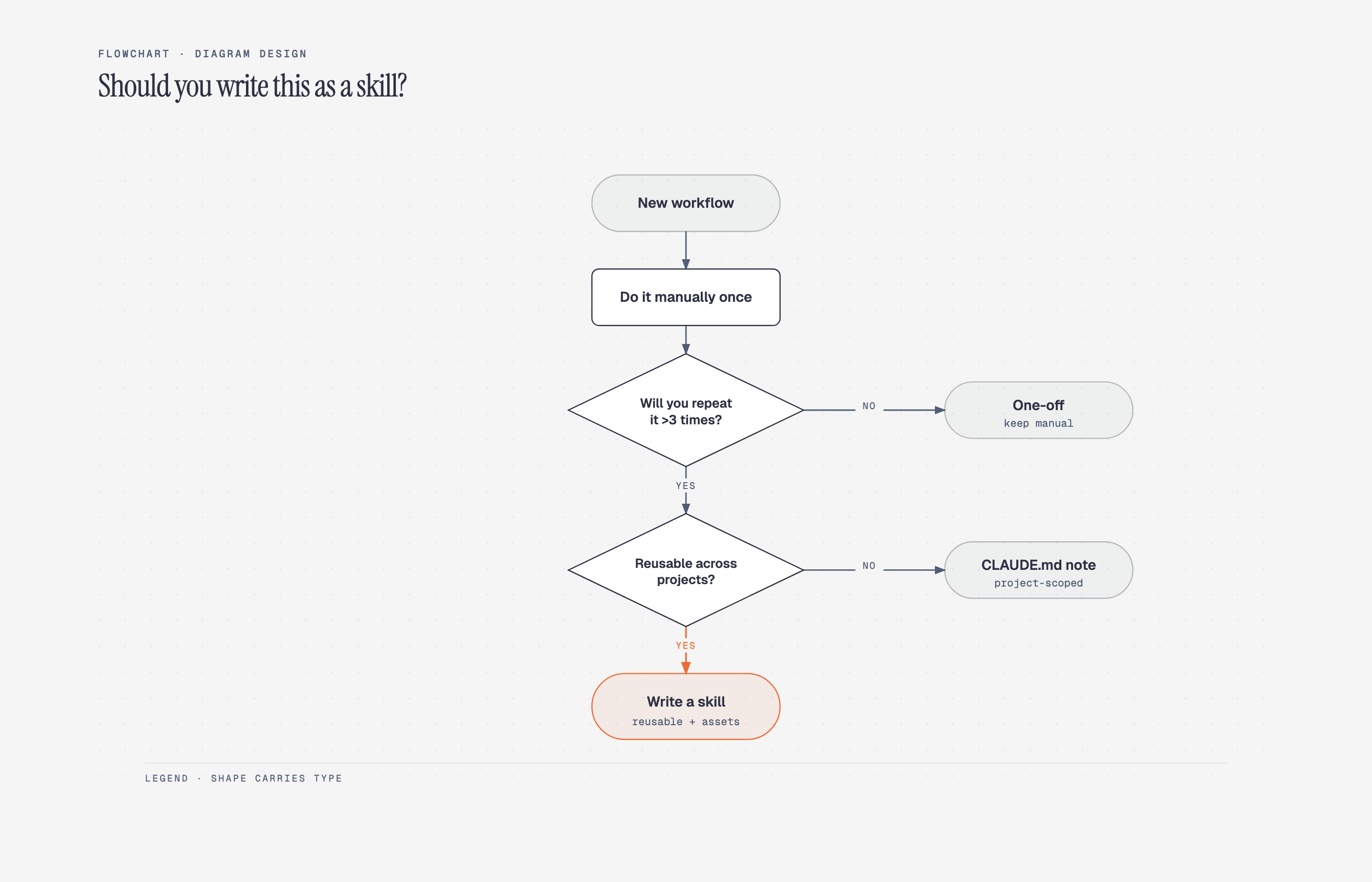
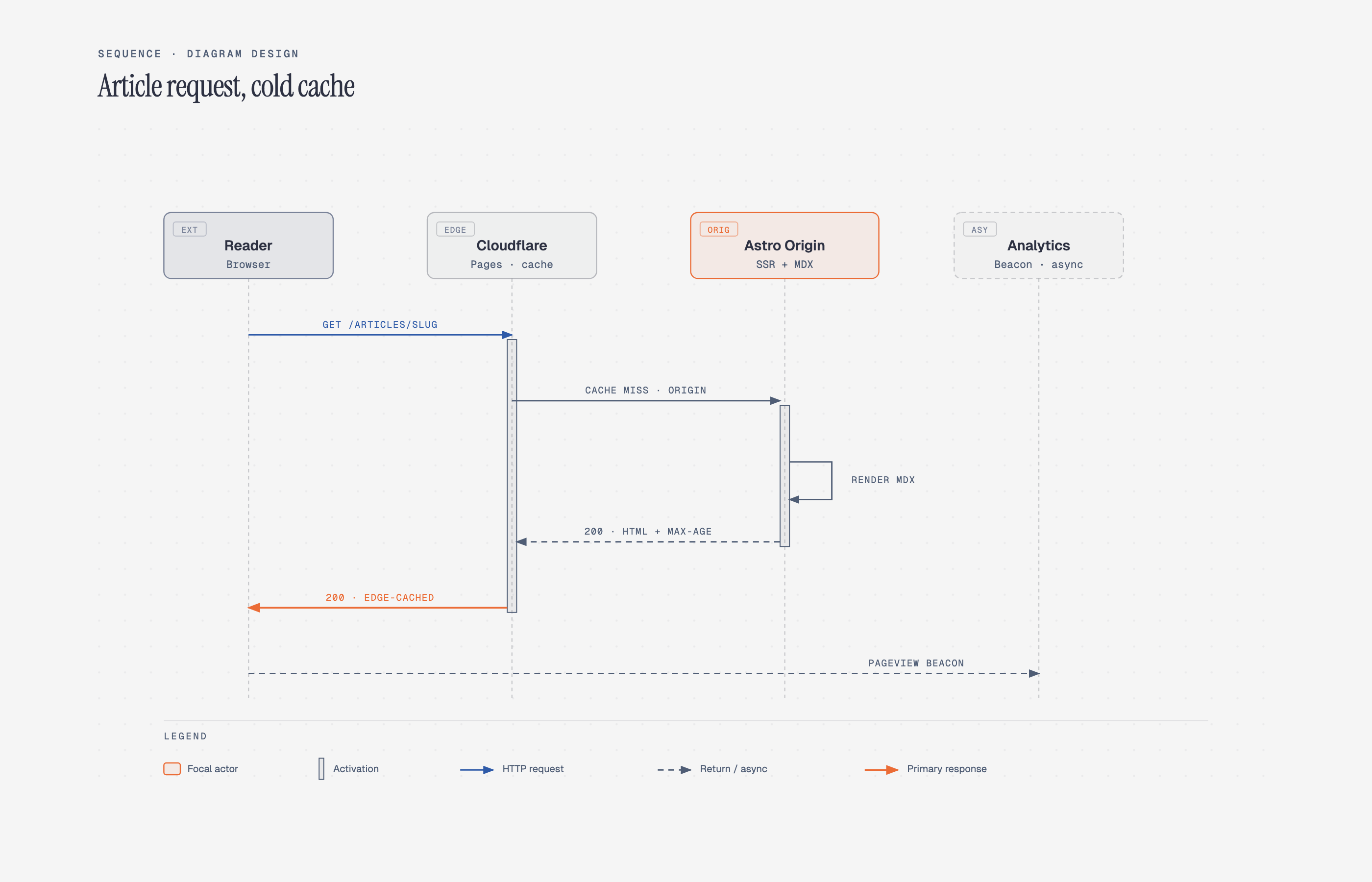
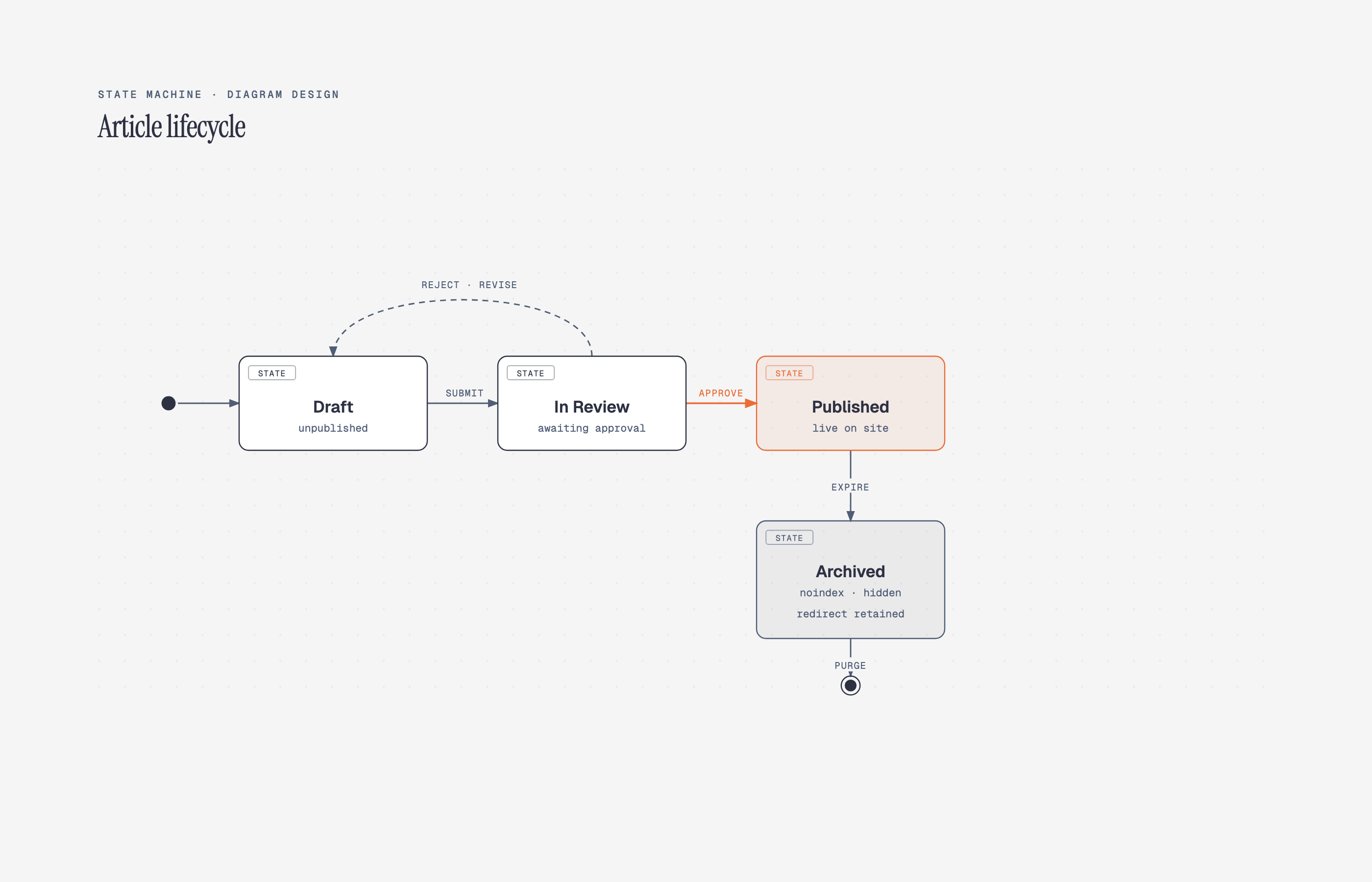
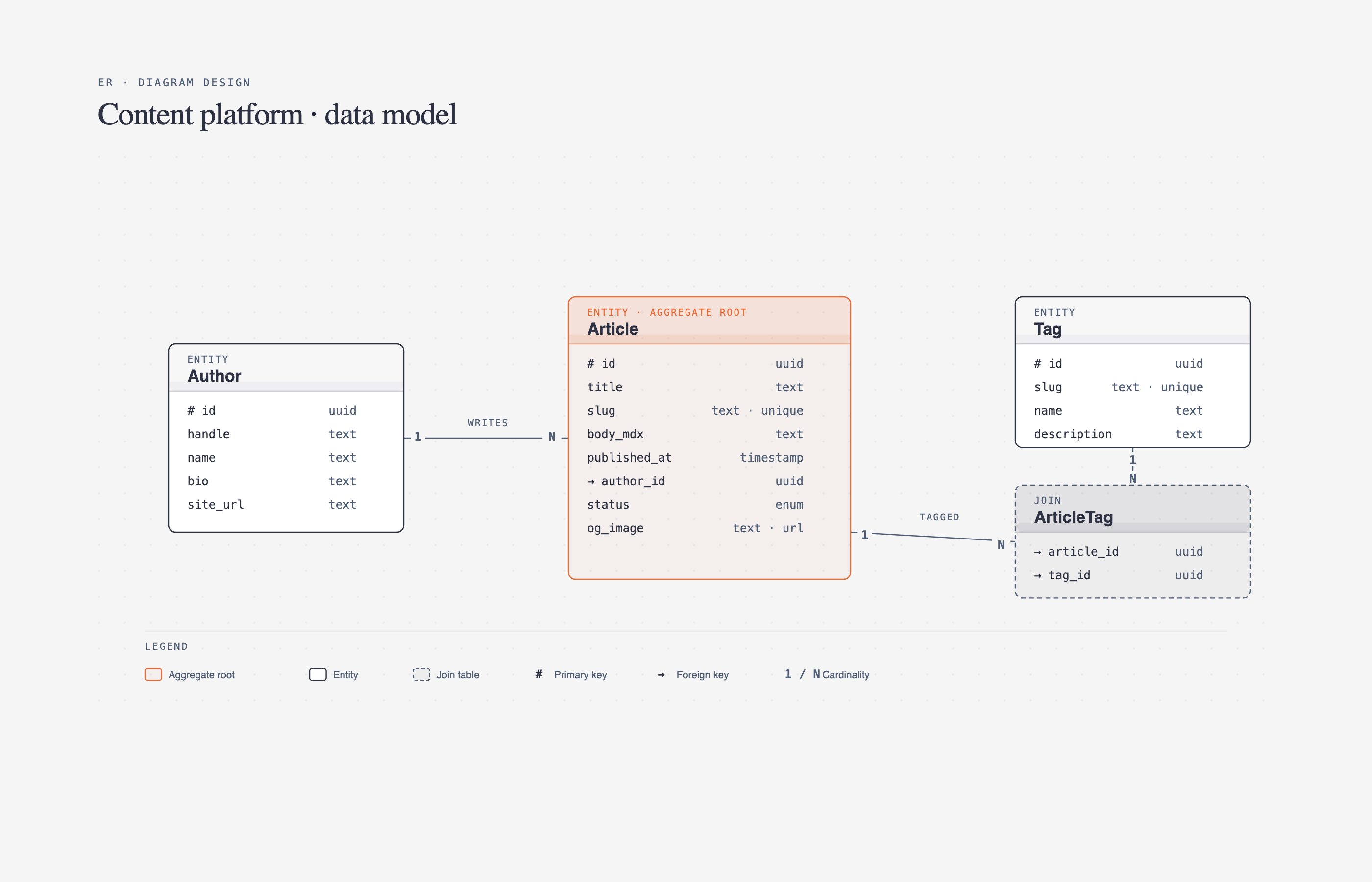
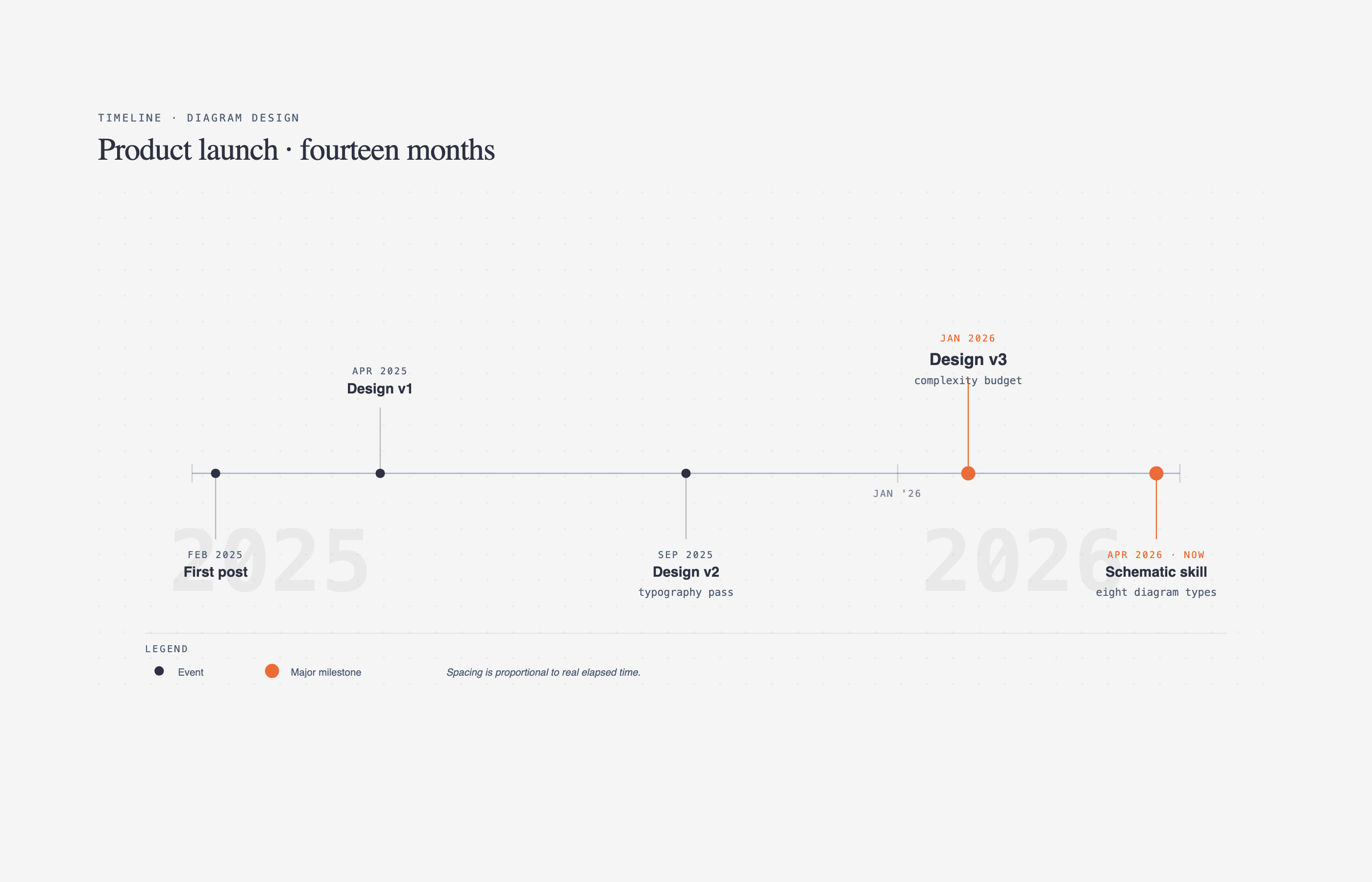
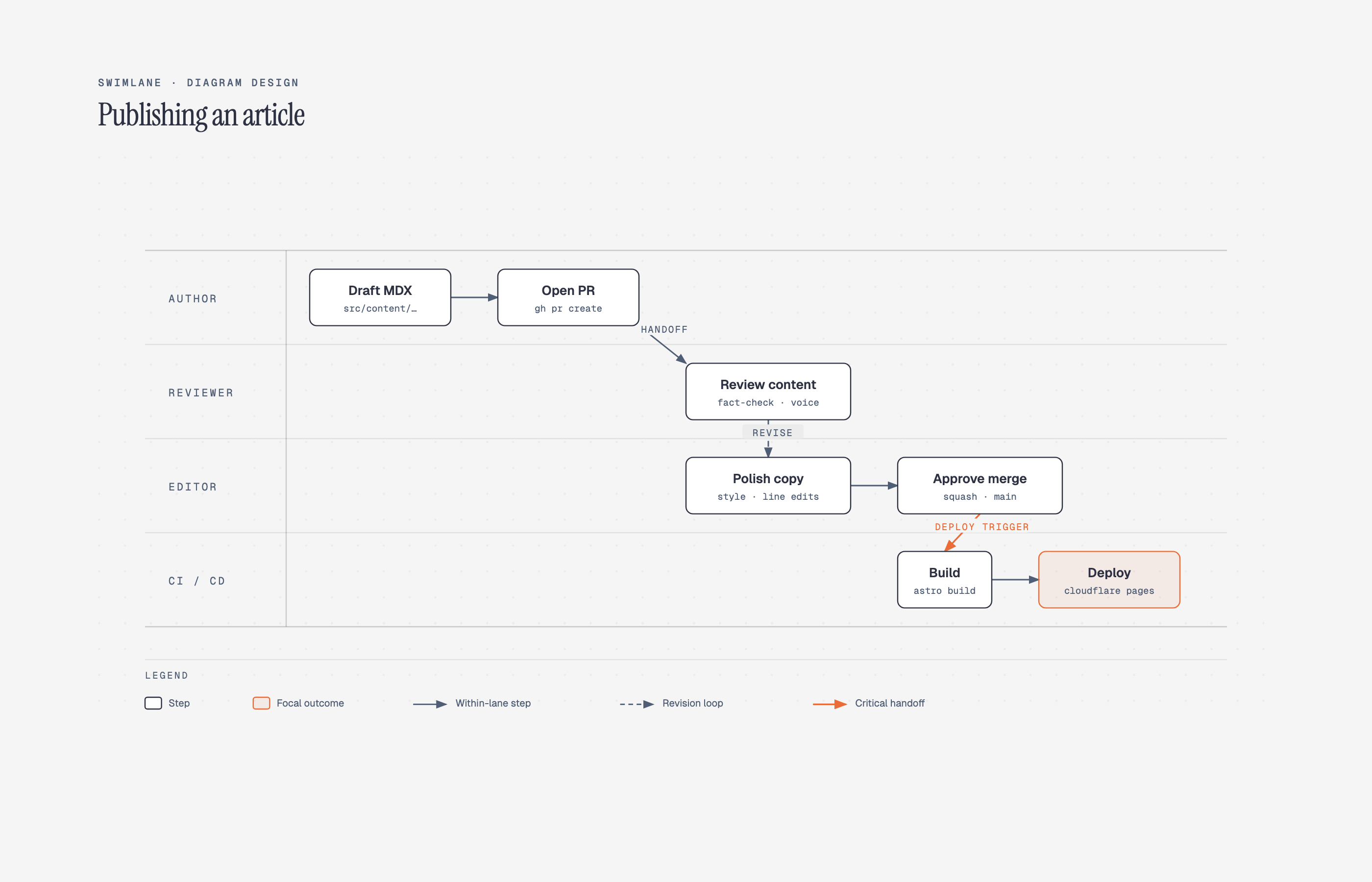
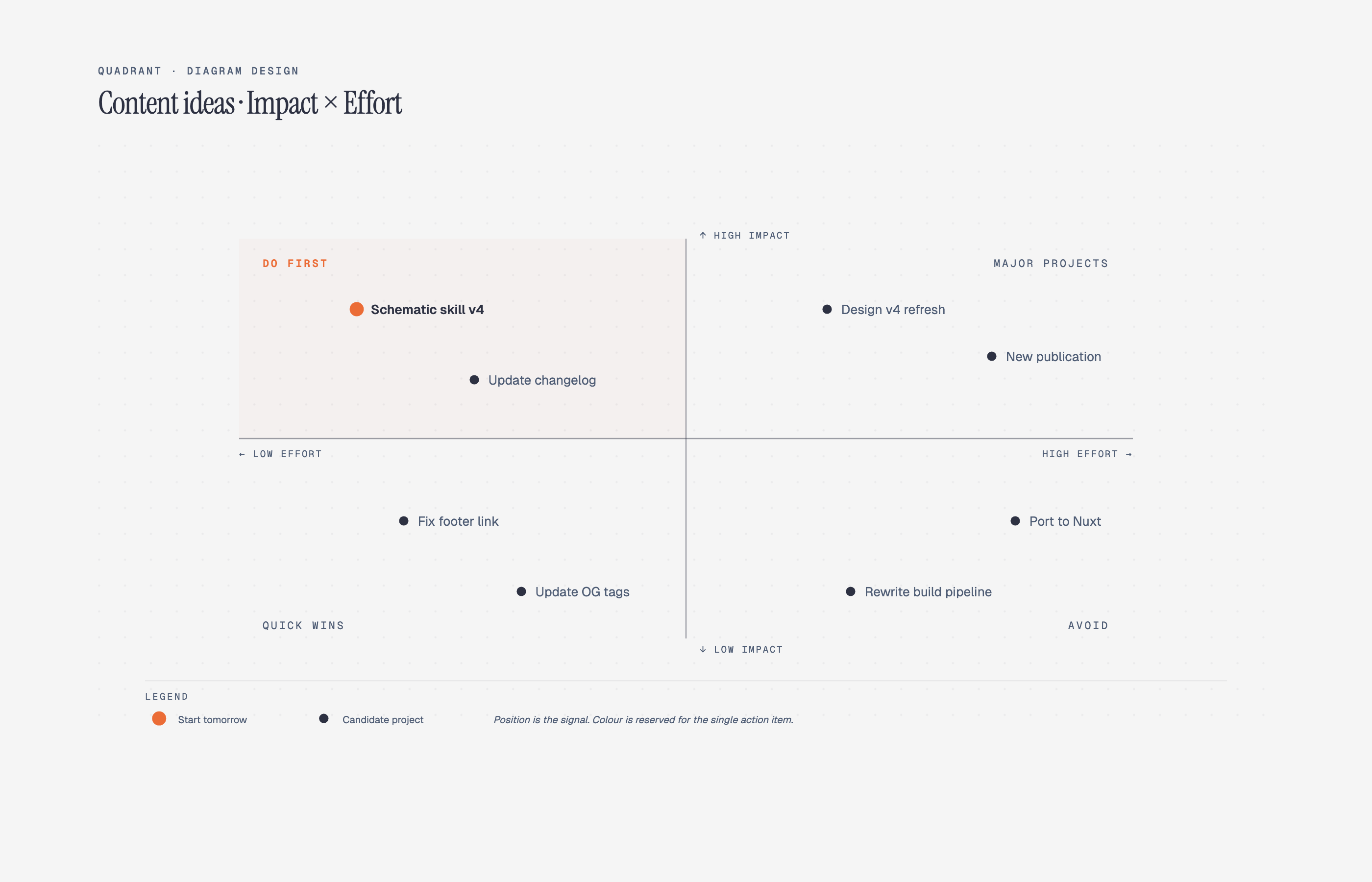
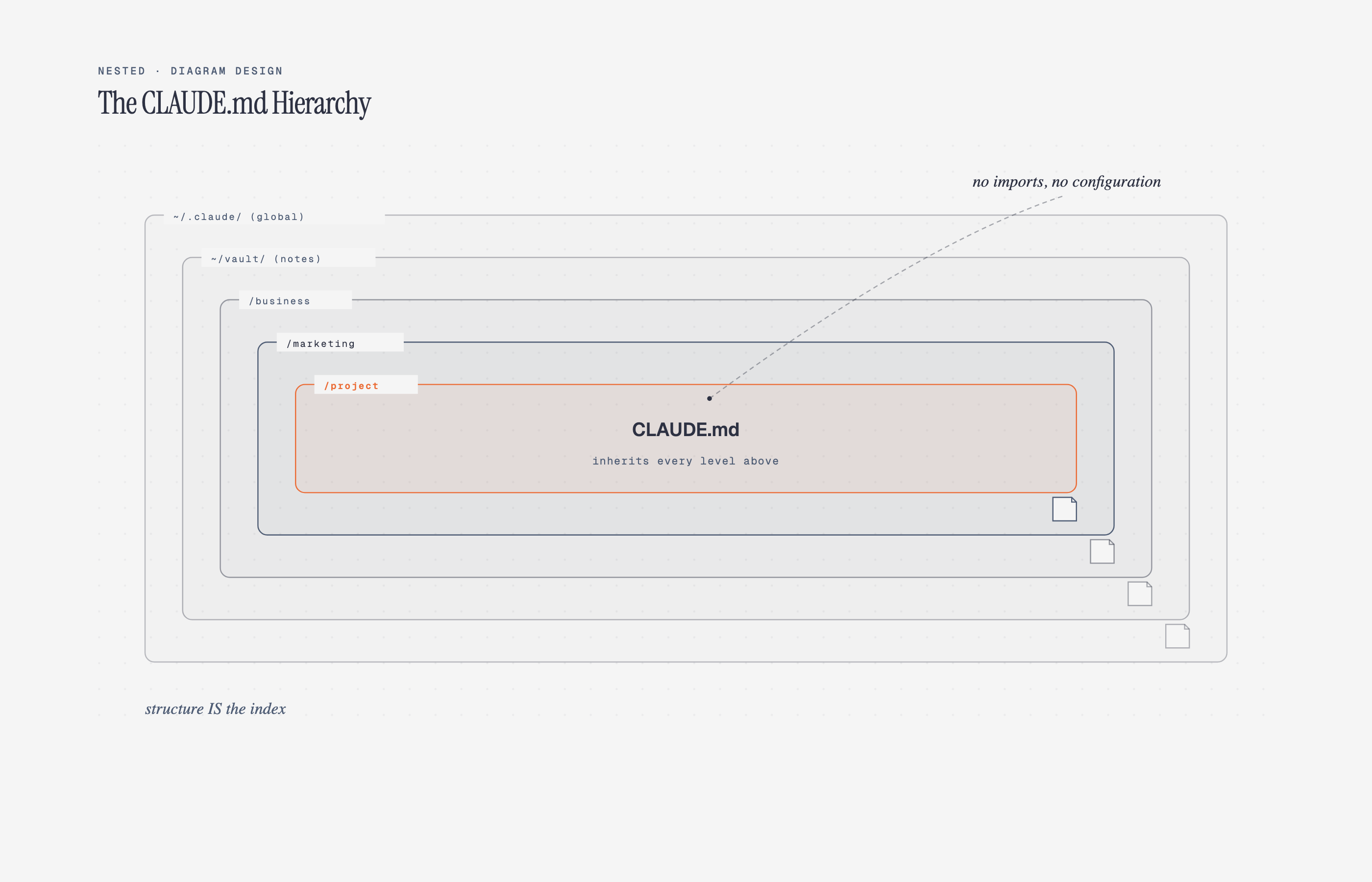
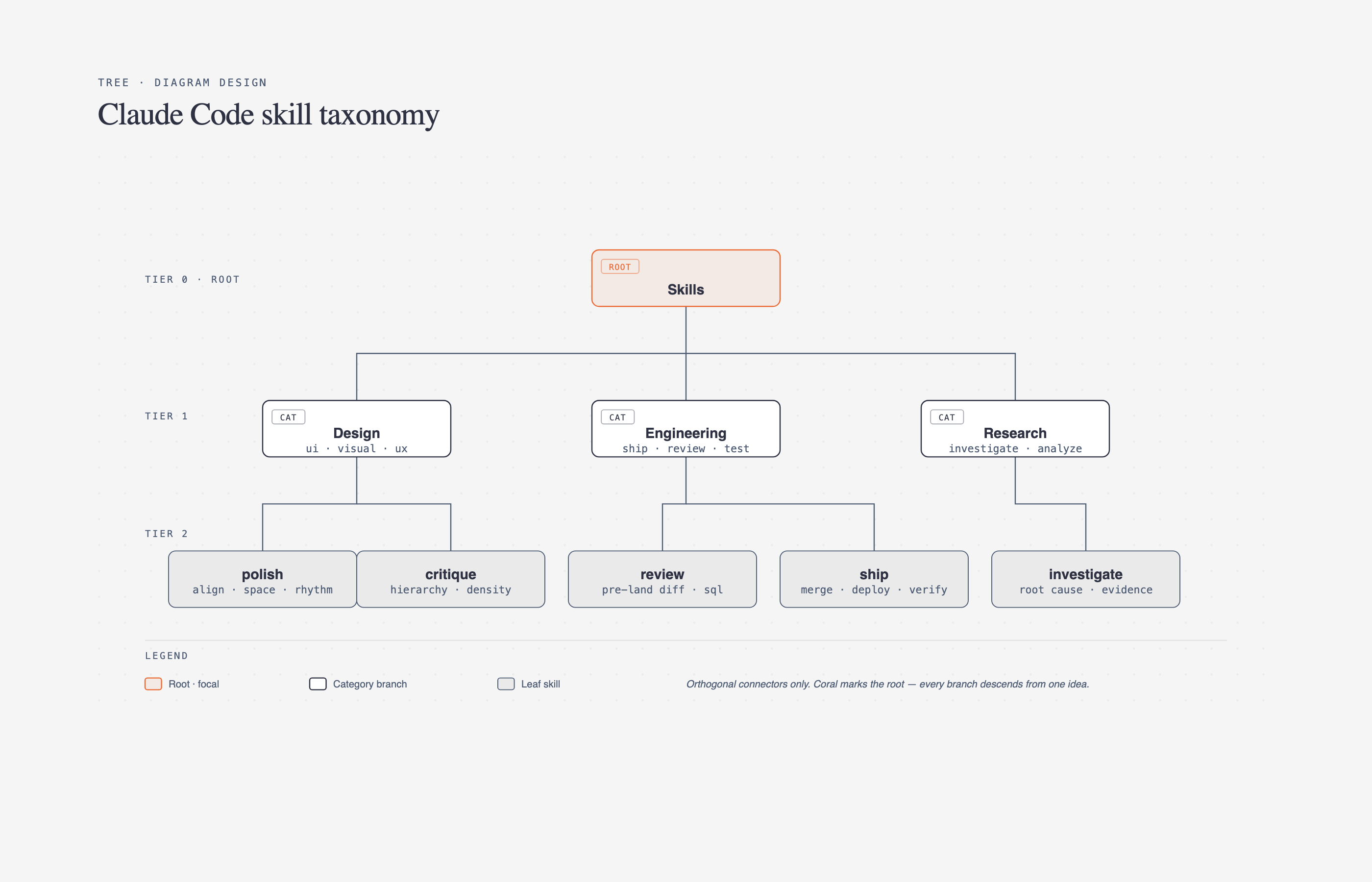
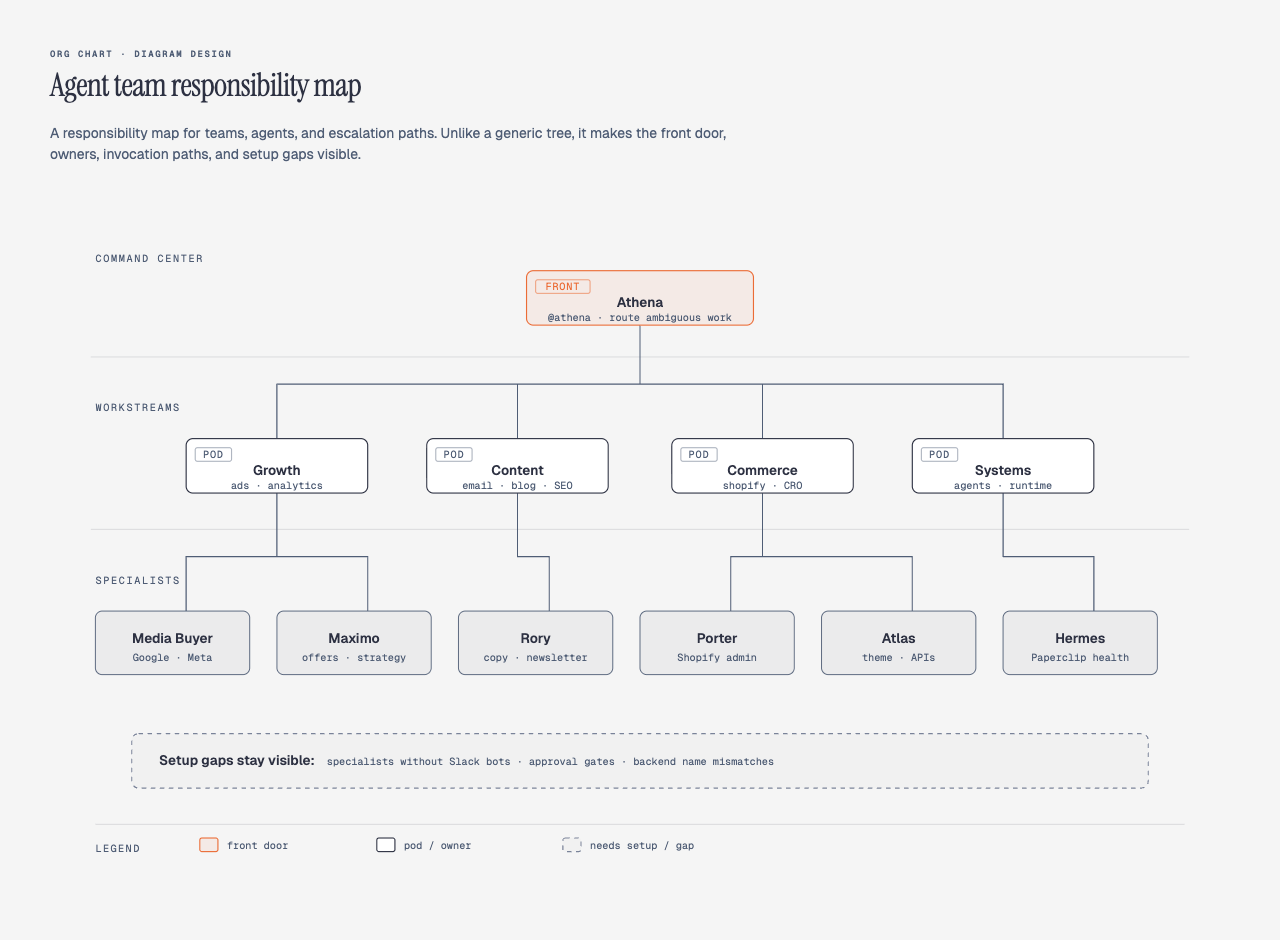
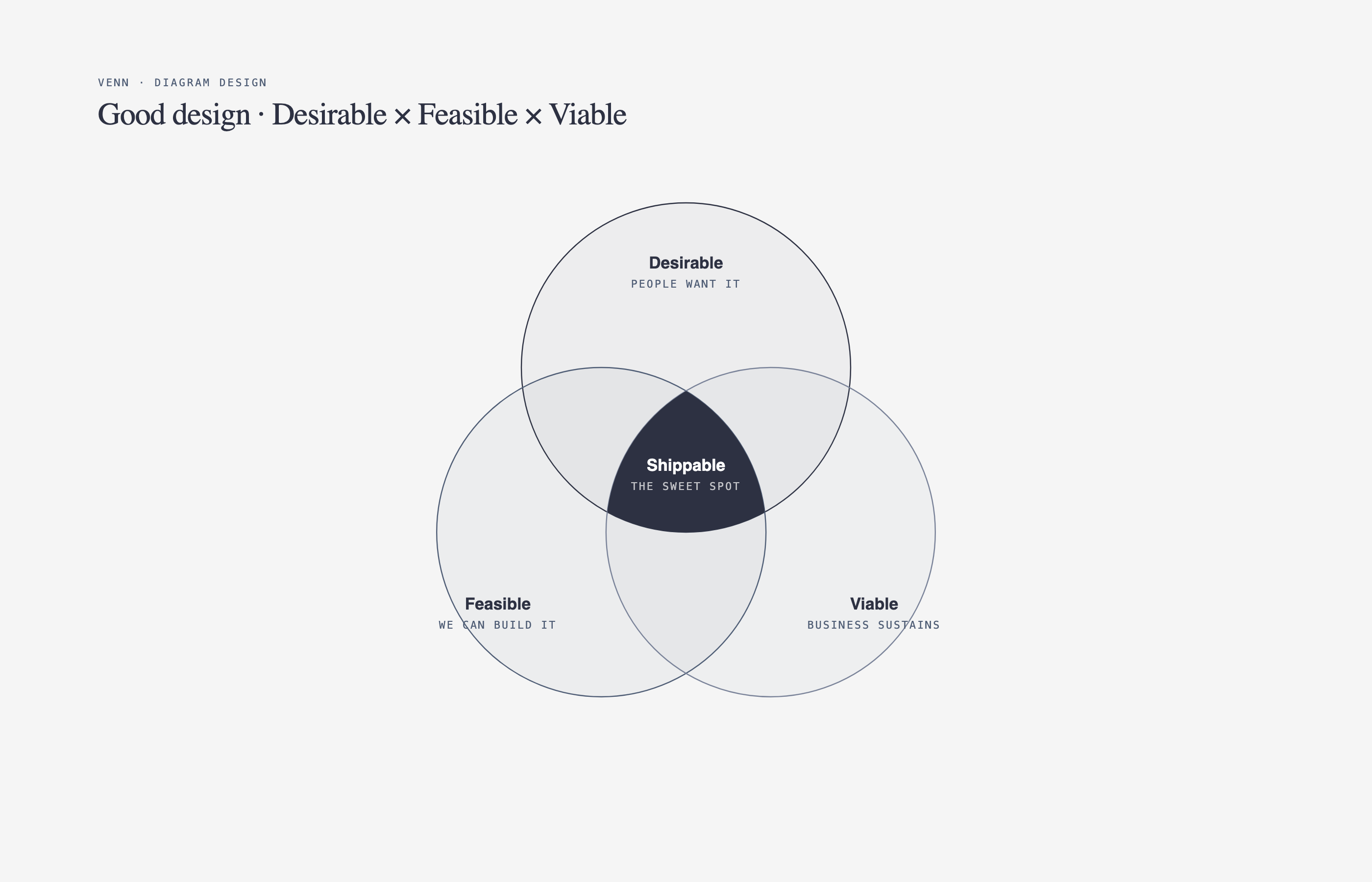
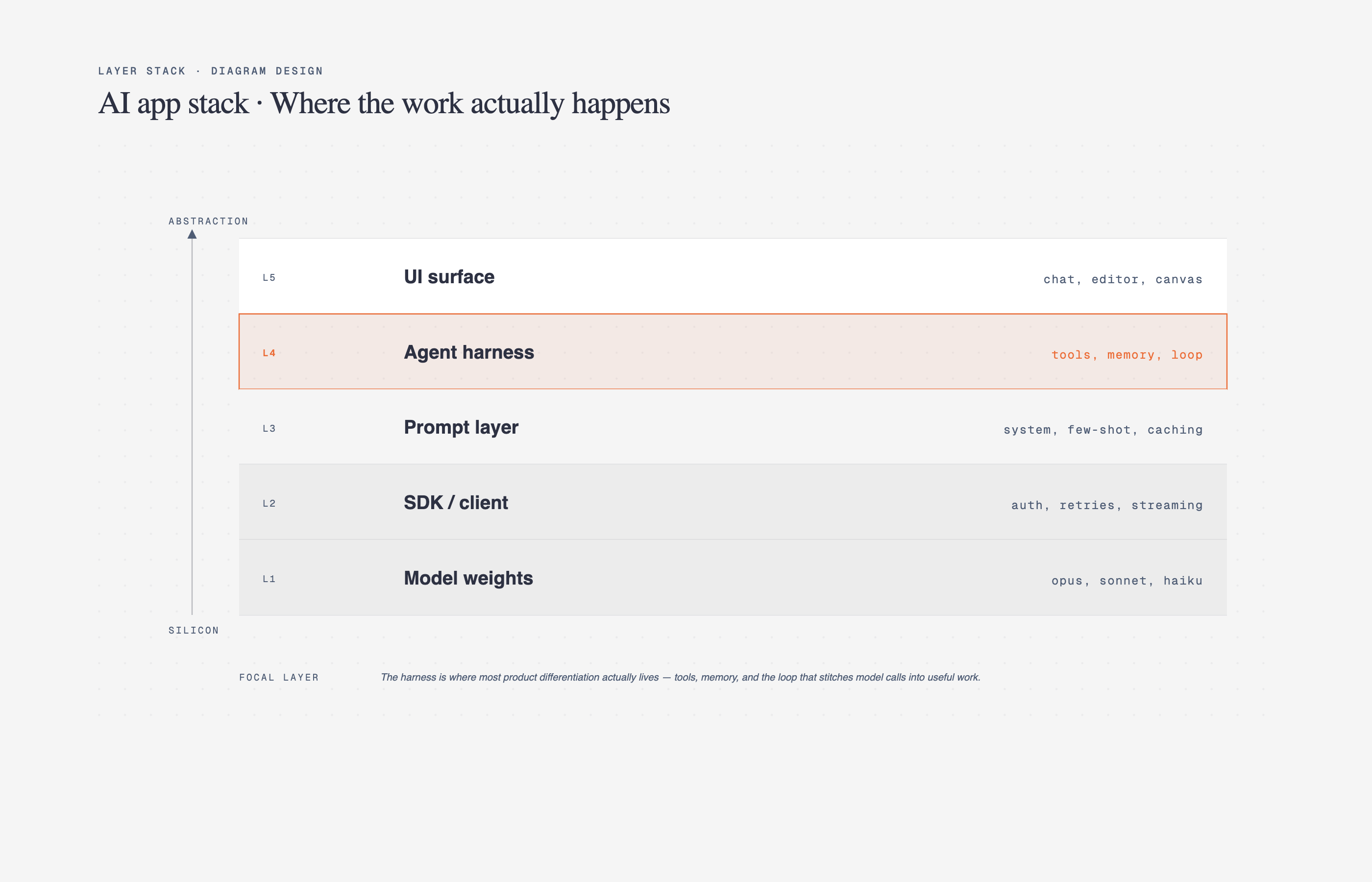
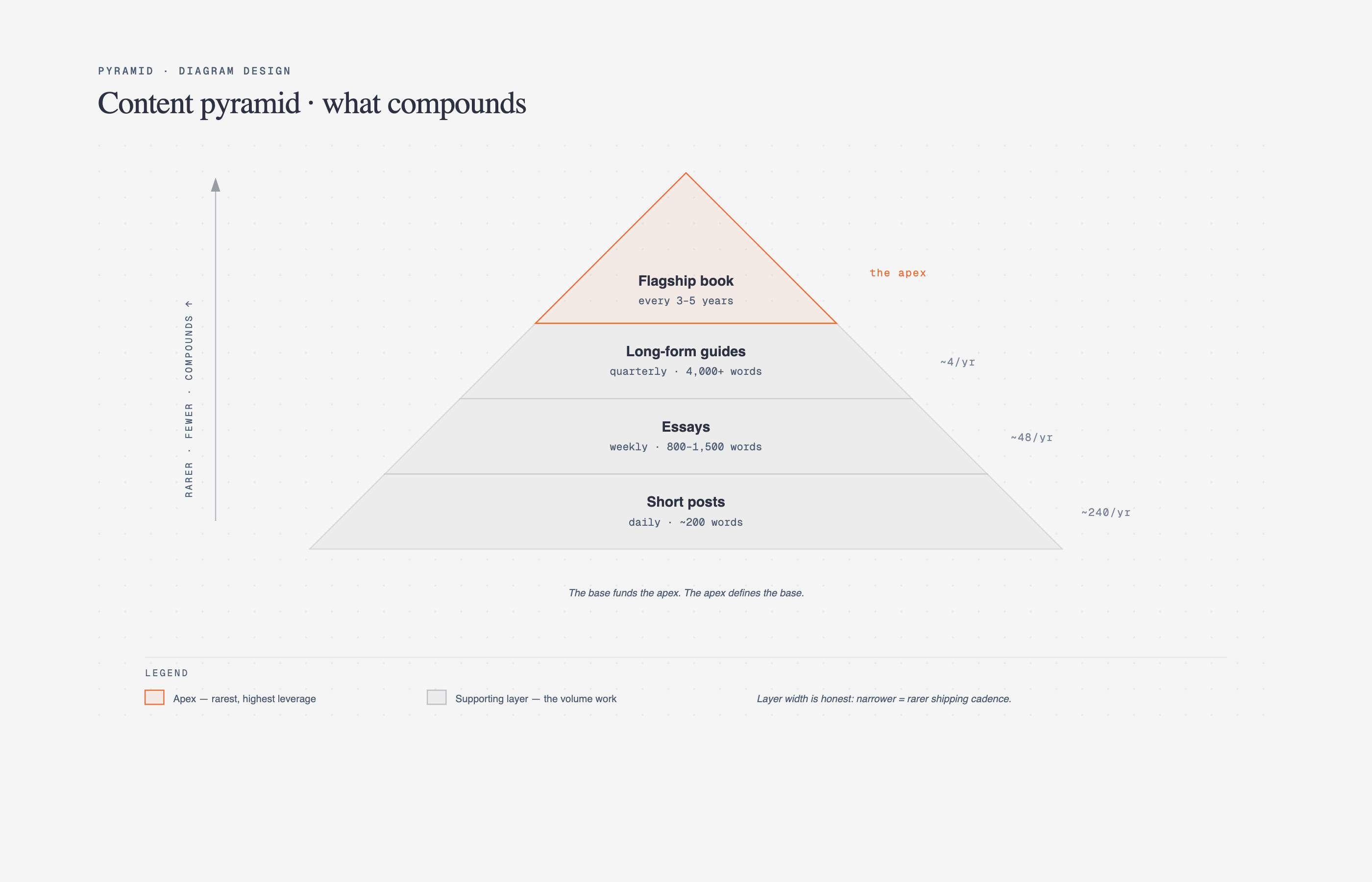
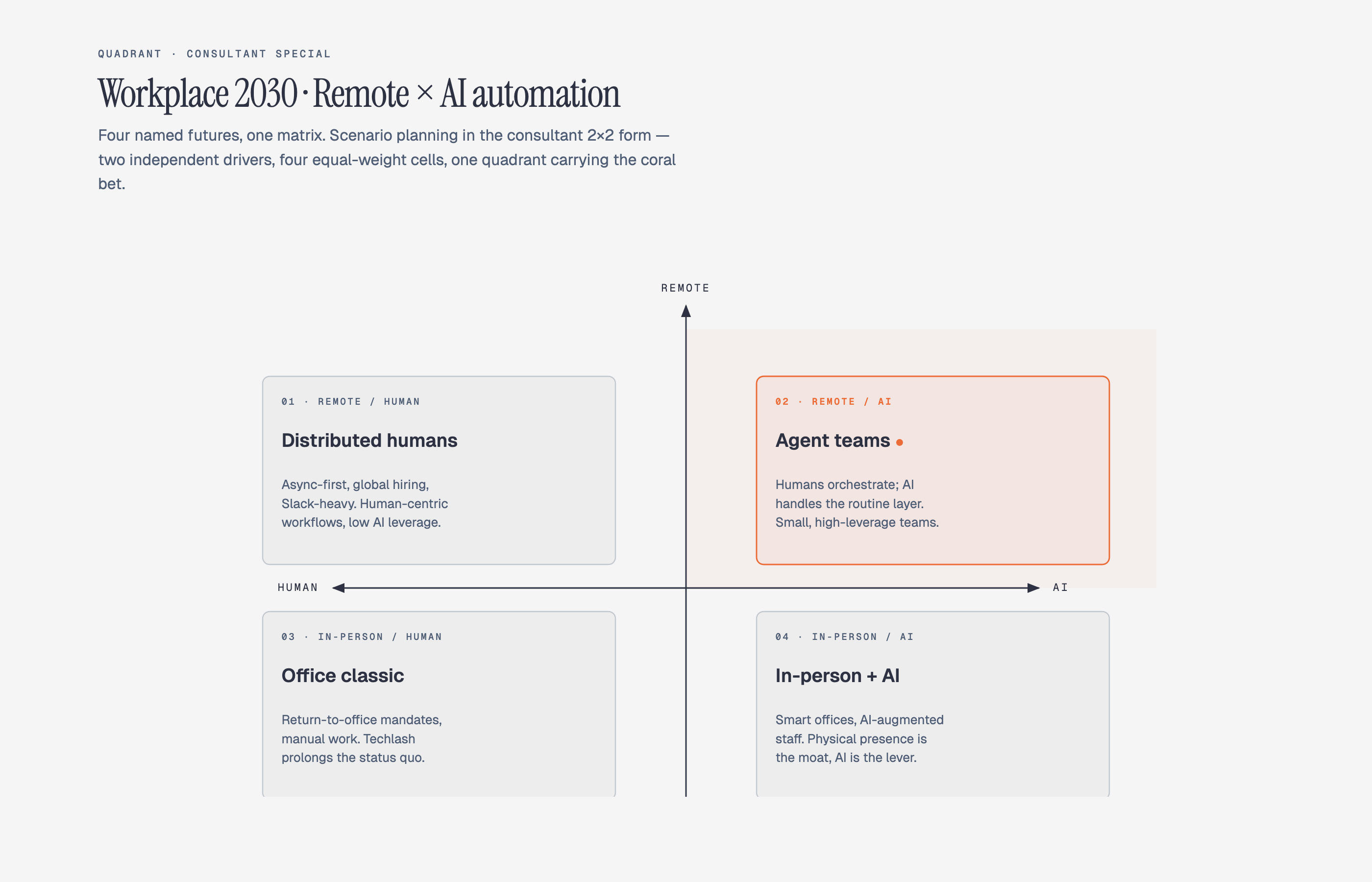
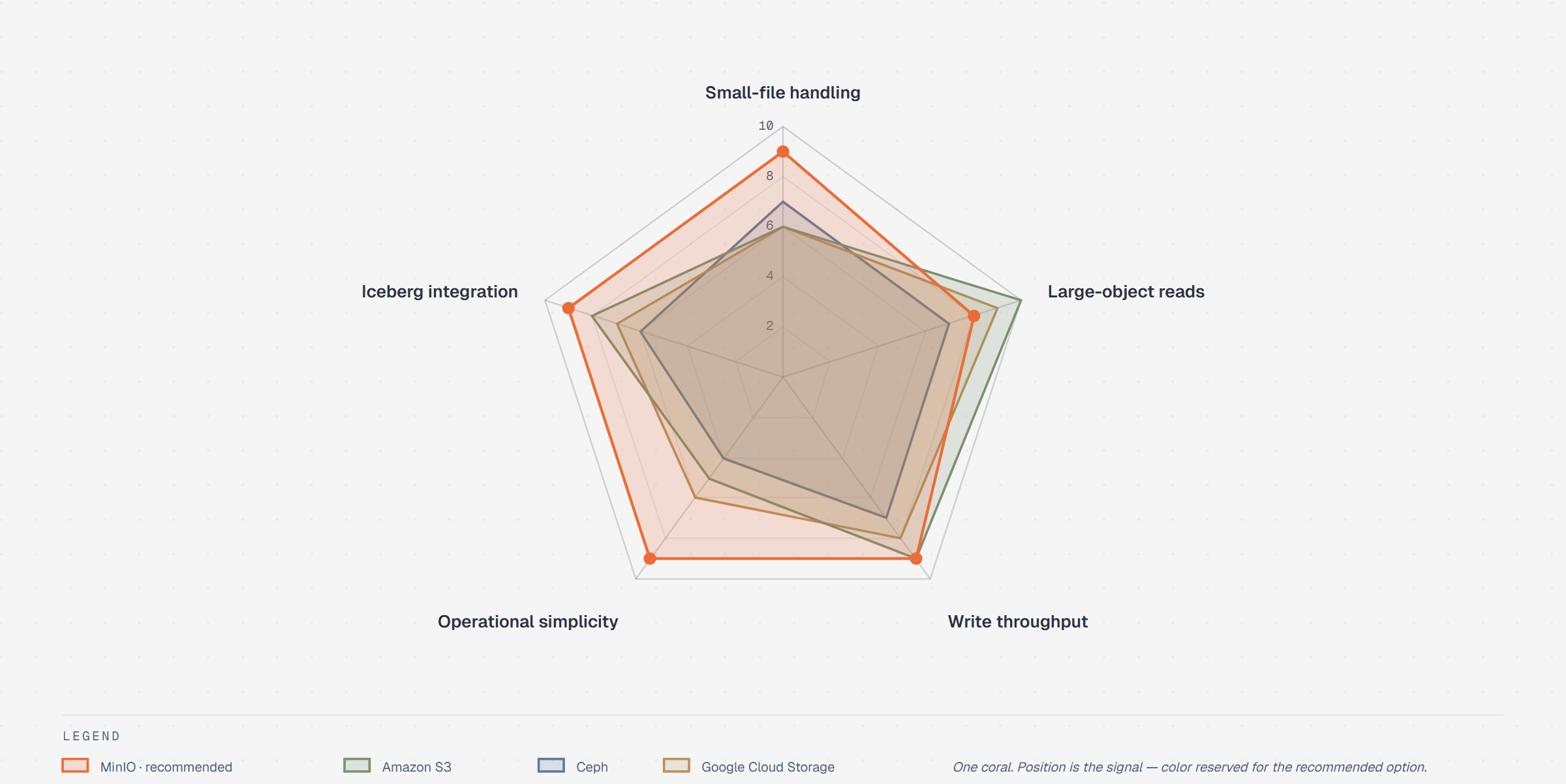
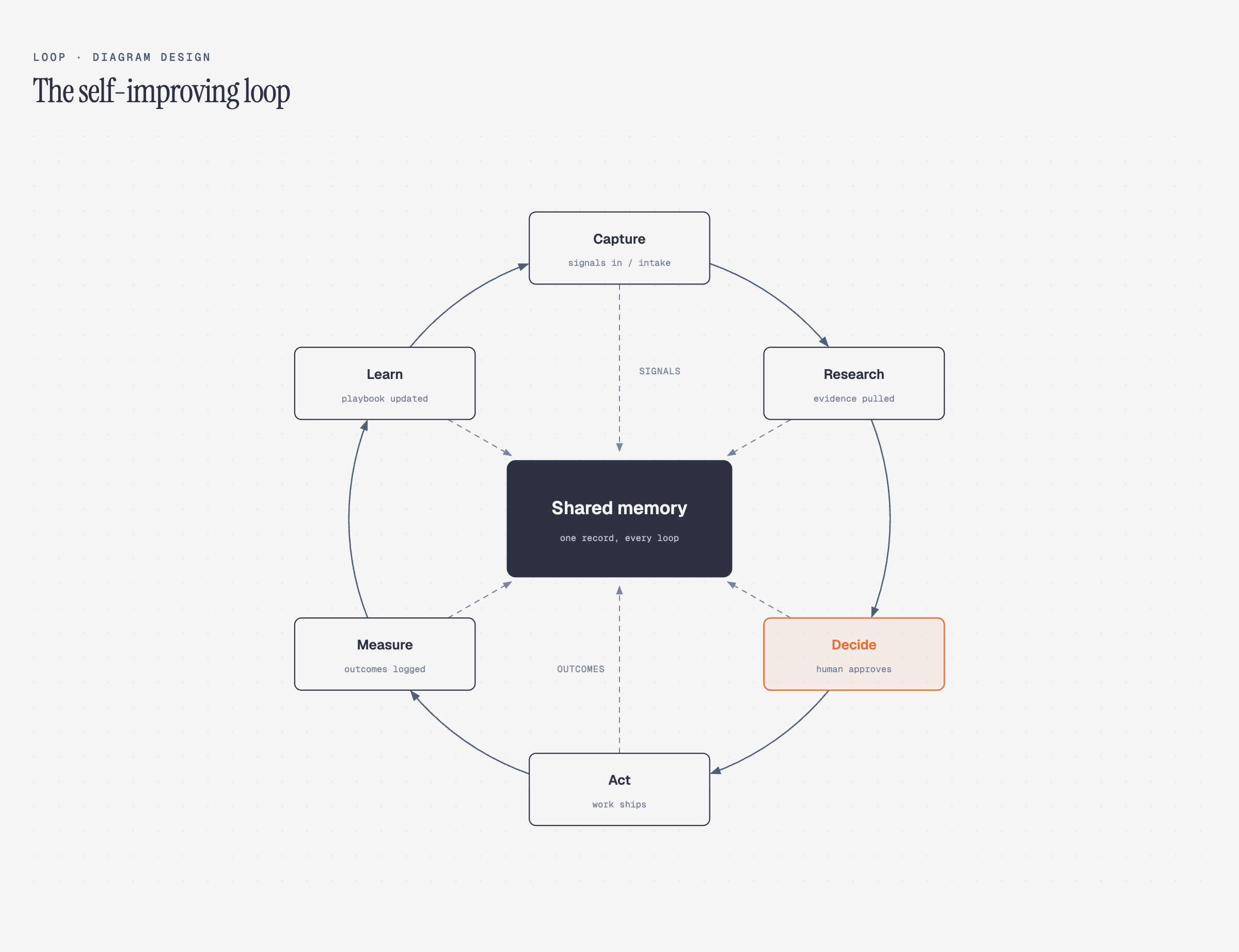
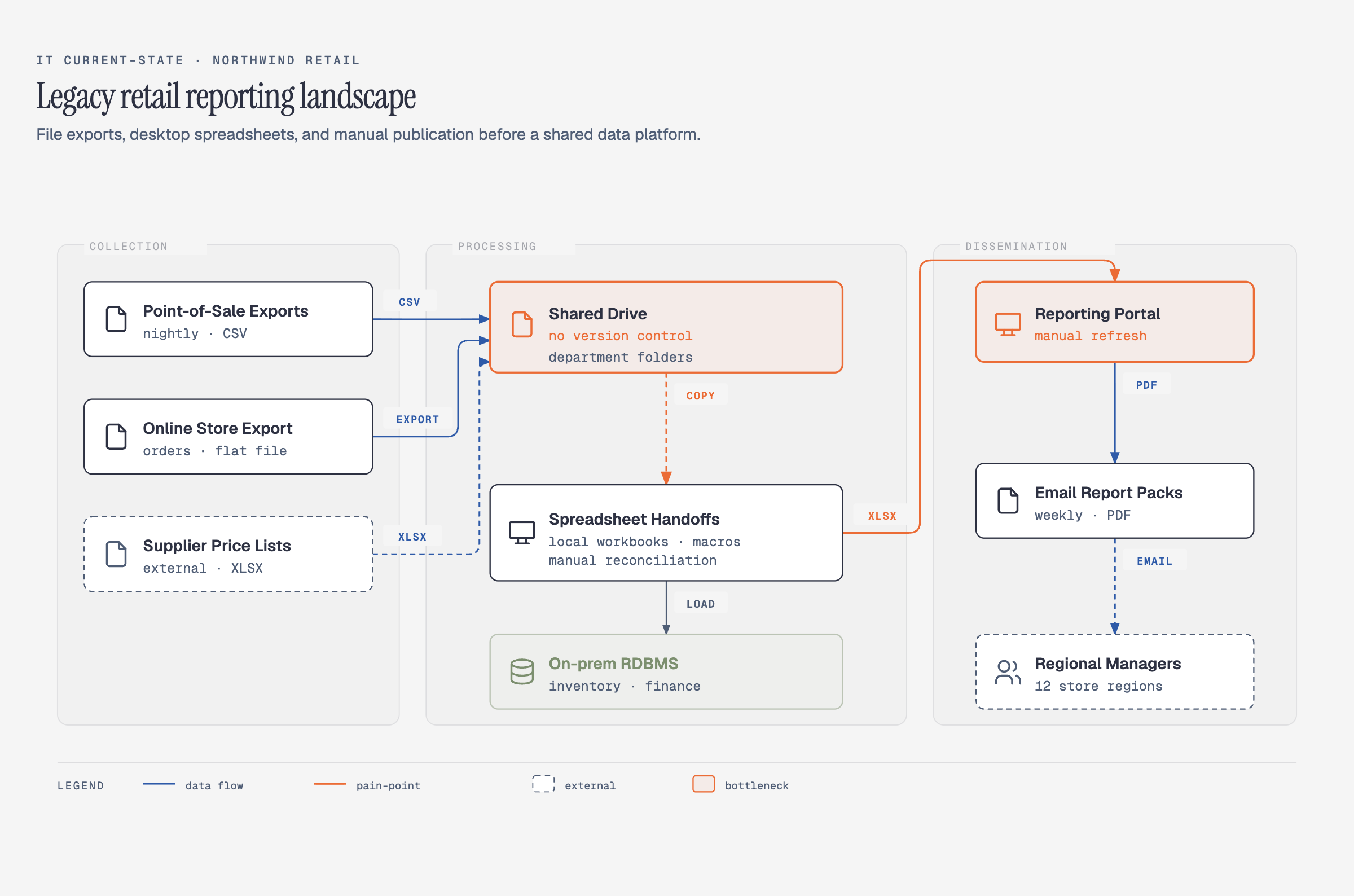
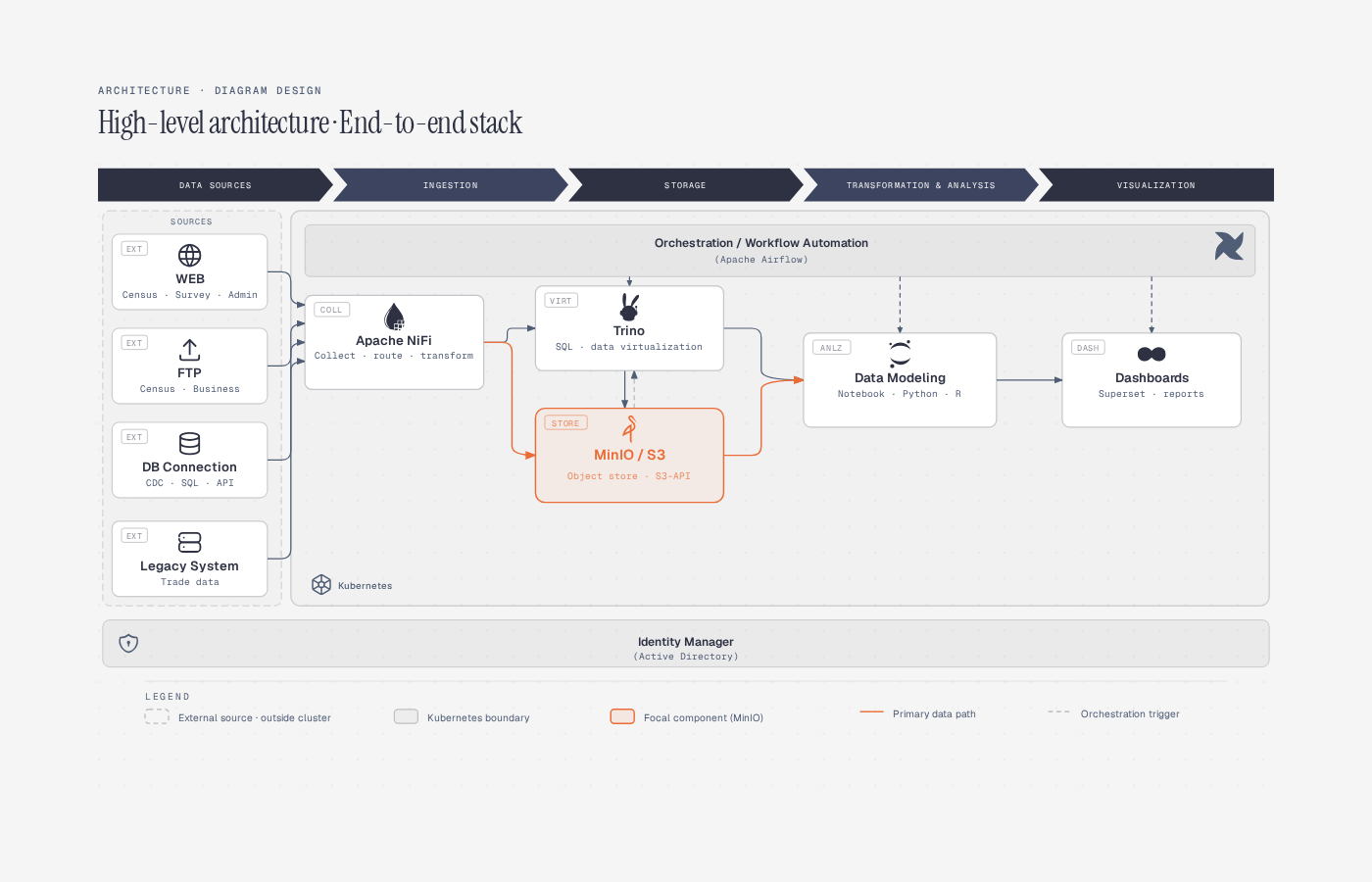
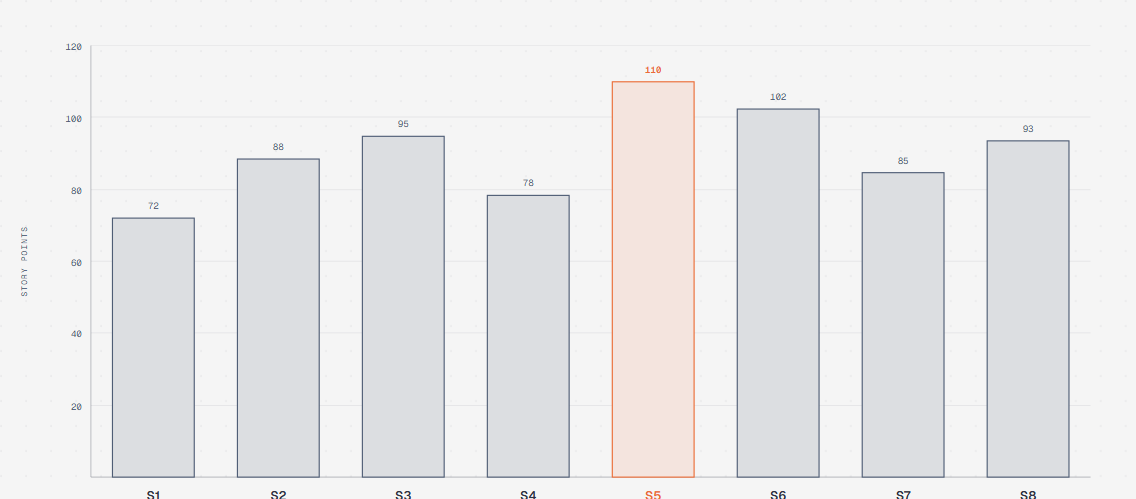
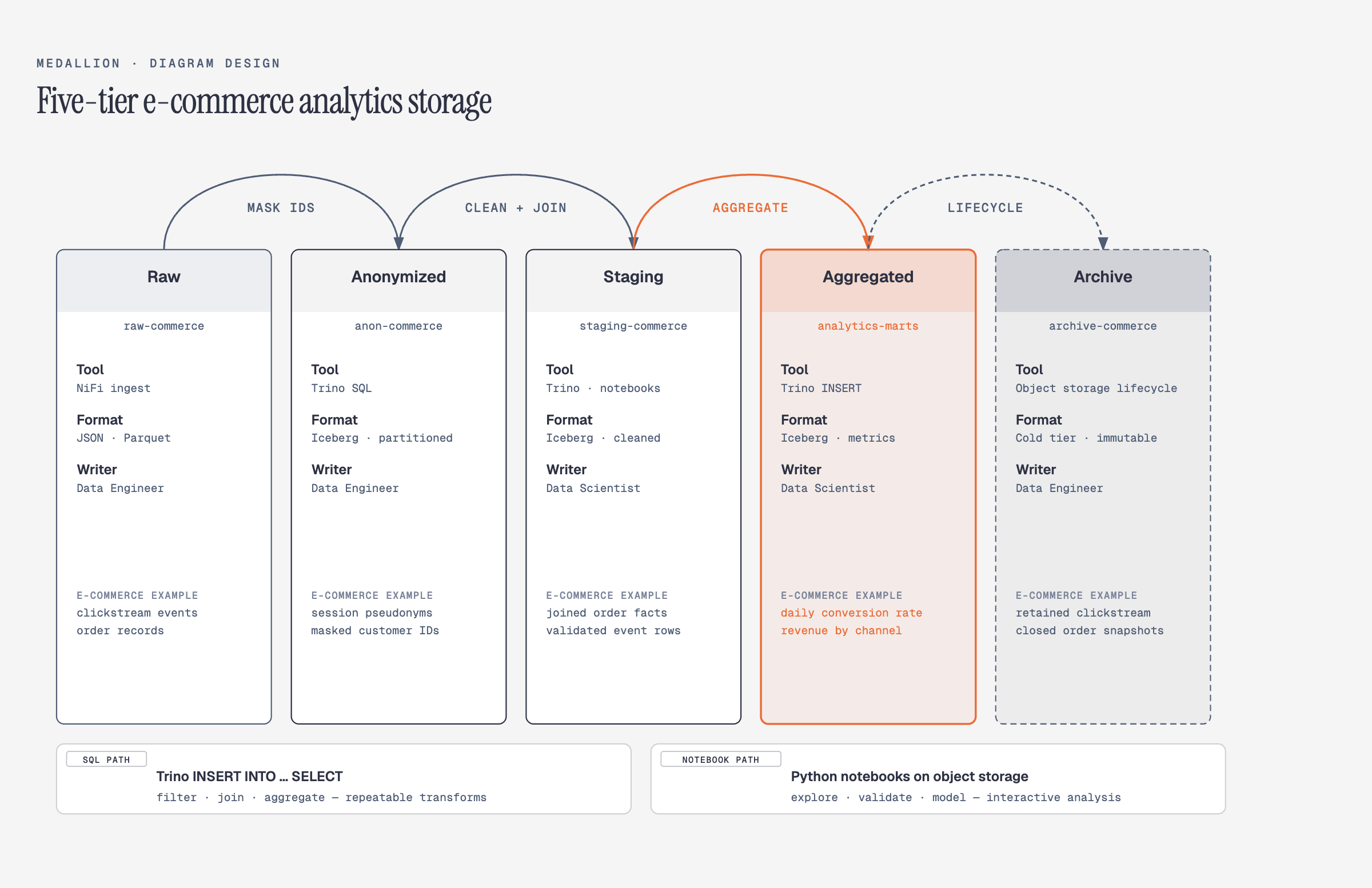
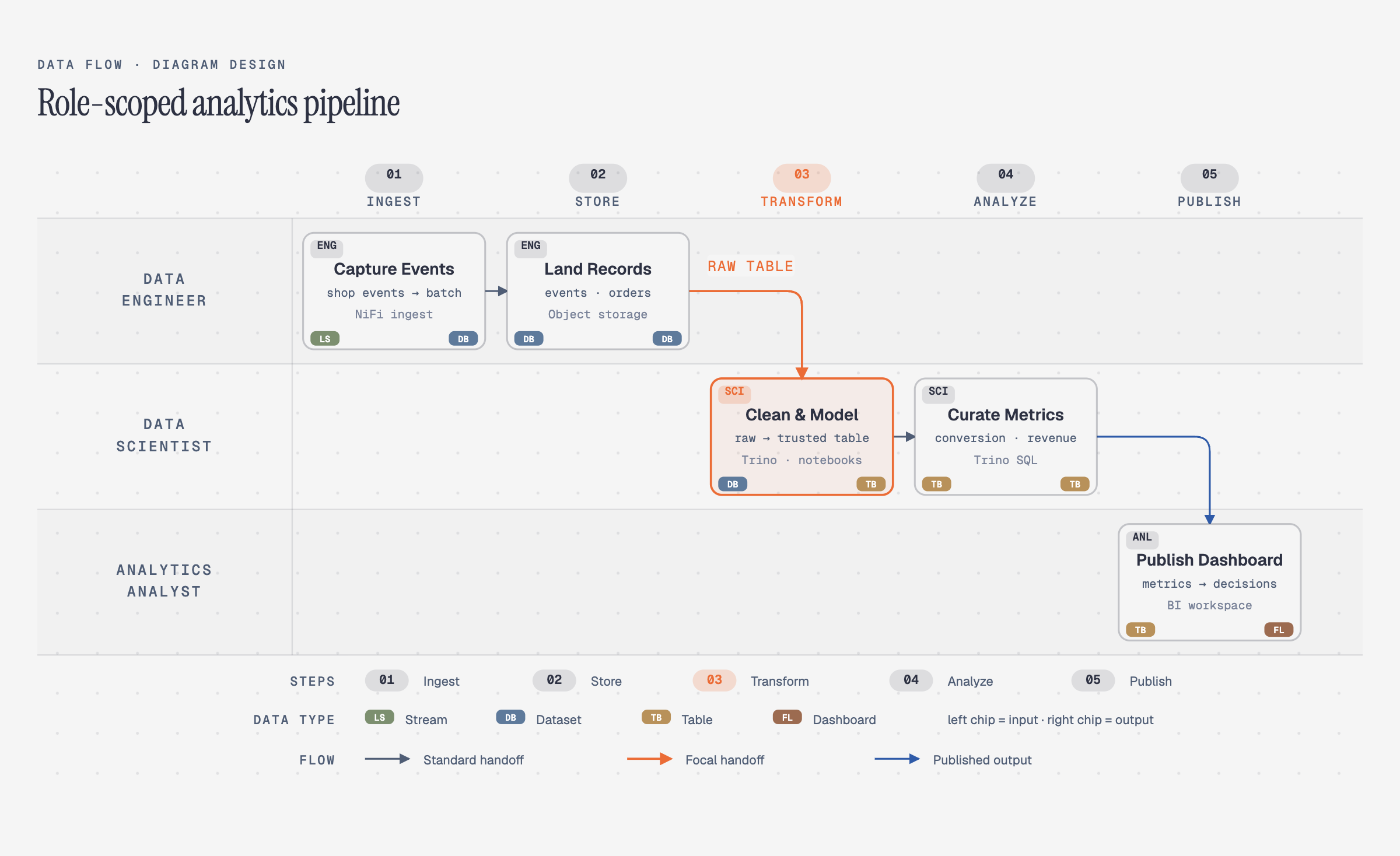
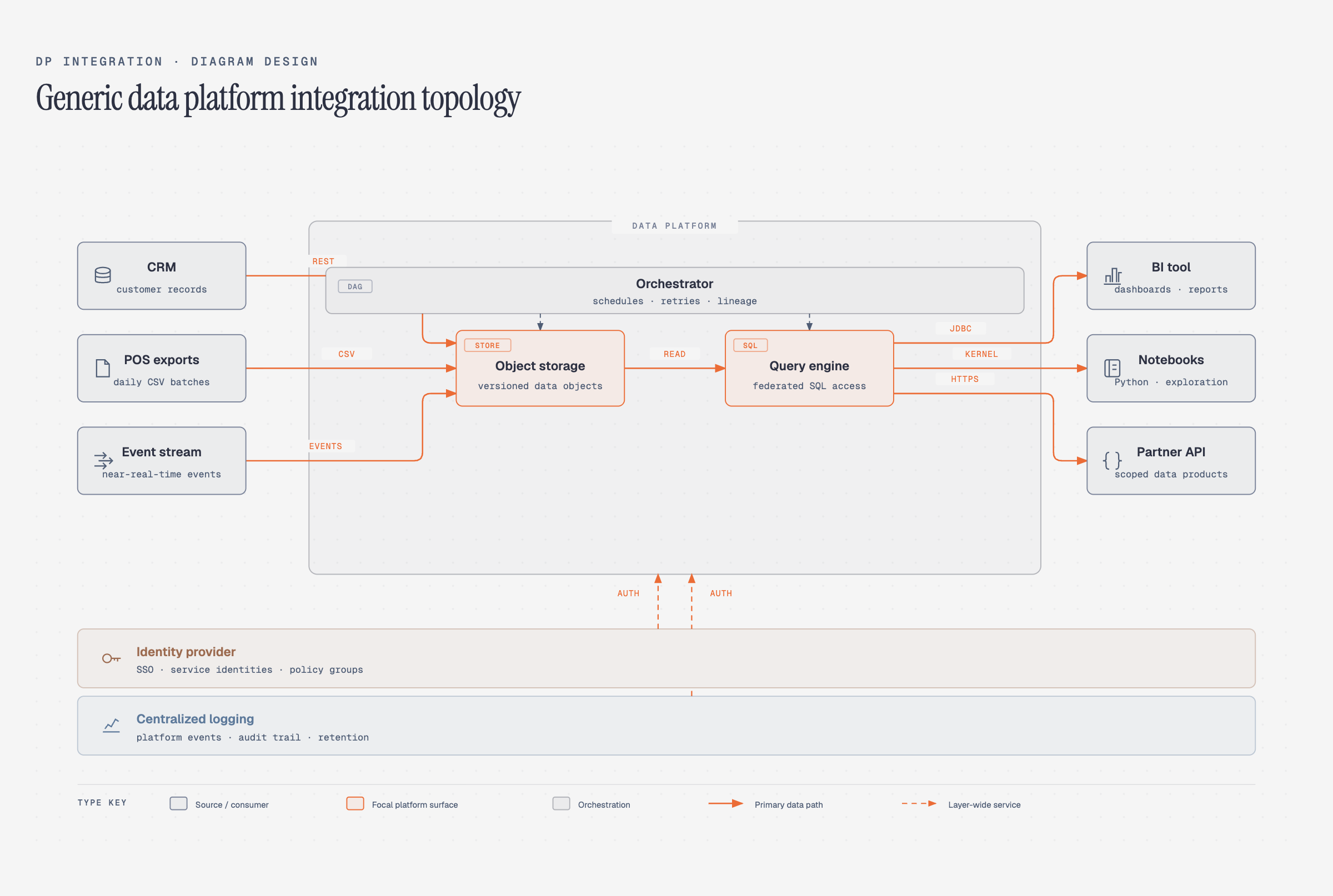
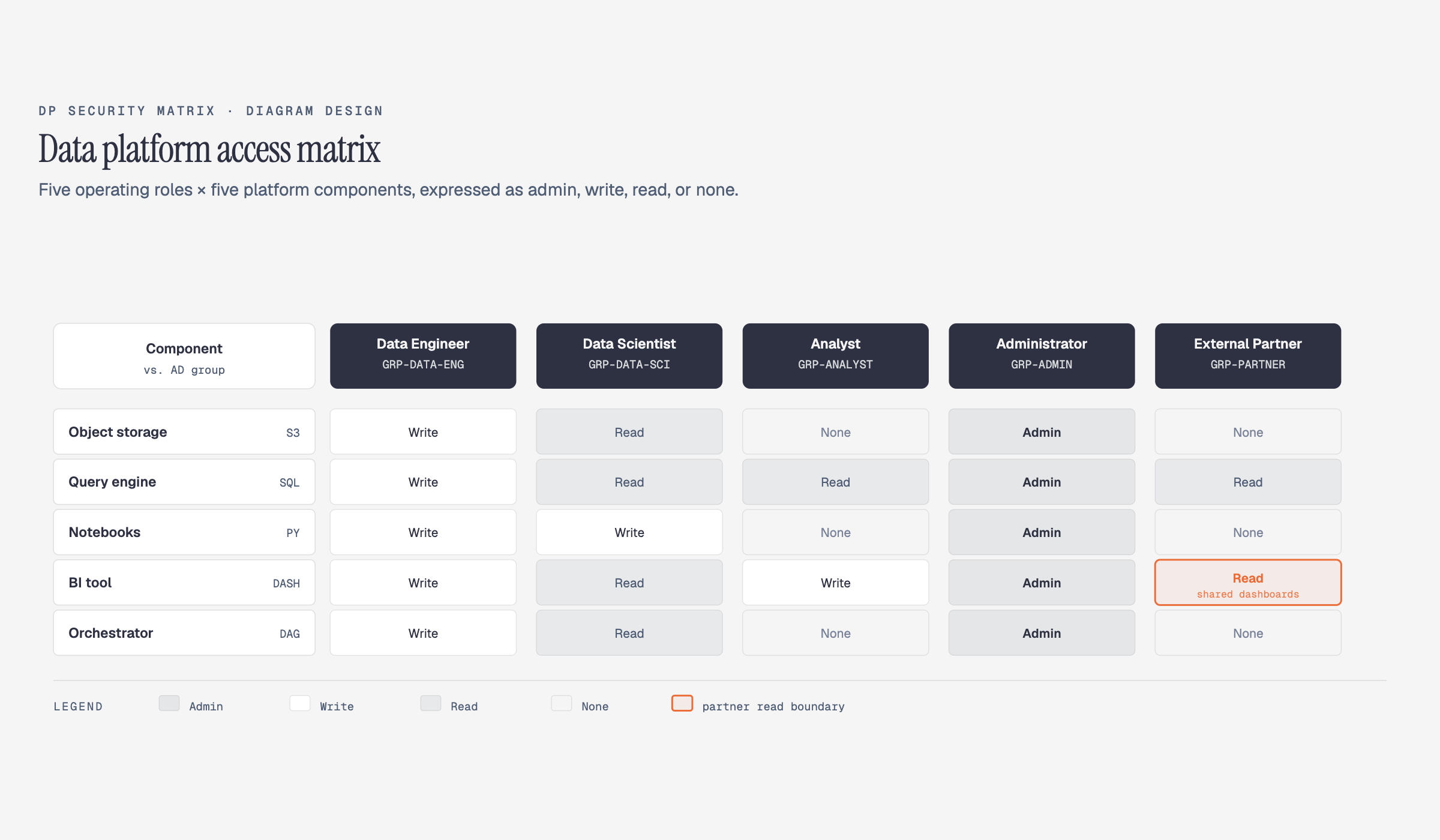
` / `` font | `sublabel` font |
### Contrast checks happen automatically
Before writing tokens, the skill verifies WCAG AA contrast on `ink` over `paper`. If your site has a color that fails contrast at diagram sizes (9–12px), it proposes an adjusted value and explains why.
### Accessible by default
Every diagram template gives the inline SVG an accessible name and description: `role="img"`, a resolving `aria-labelledby`, and first-child `` / `<desc>` slots. IDs are prefixed per diagram and variant, so multiple SVG exports can be safely inlined on one page without duplicate accessible-name IDs. Decorative specimen icons are hidden from assistive technology instead.
### Manual override
Prefer to set tokens by hand? Open [`skills/diagram-design/references/style-guide.md`](skills/diagram-design/references/style-guide.md) and edit the table. Everything downstream reads from there — all 27 diagrams, the annotation primitive, and the gallery all inherit semantic role names (`accent`, not `#eb6c36`).
### First-run gate
The skill won't silently ship default-skinned diagrams into a branded project. On first use in a new project, it checks if `style-guide.md` has been customized. If not, it pauses and asks:
> *"This is your first diagram in this project. The style guide is still at the default. Want to run onboarding, paste tokens manually, or proceed with default?"*
See [`skills/diagram-design/references/onboarding.md`](skills/diagram-design/references/onboarding.md) for the full spec.
---
## Quickstart
```bash
# From a cloned checkout, open the gallery to see all 27 diagrams
open skills/diagram-design/assets/index.html # macOS
xdg-open skills/diagram-design/assets/index.html # Linux
# In Claude Code, Codex, or Pi, ask:
# "Make me an architecture diagram of my app: frontend, backend, database, Redis cache."
# "I need a quadrant showing Q2 projects by impact vs effort."
# "Give me a sequence of a bearer call with token refresh on 401."
# (branching refresh uses the ALT combined-fragment grammar in type-sequence.md;
# see skills/diagram-design/assets/example-sequence-oauth.html — not a full authorize-code handshake)
```
Your agent will pick the right type, build the HTML, and save it. You can also start from a template directly:
```bash
cp skills/diagram-design/assets/template.html my-diagram.html # minimal light
cp skills/diagram-design/assets/template-full.html my-diagram.html # editorial with summary cards
```
---
## Import from draw.io or Mermaid
Already have diagrams in draw.io / diagrams.net or Mermaid? Point the skill at the source and it **redraws** them — same content, this design system, at whatever the destination needs.
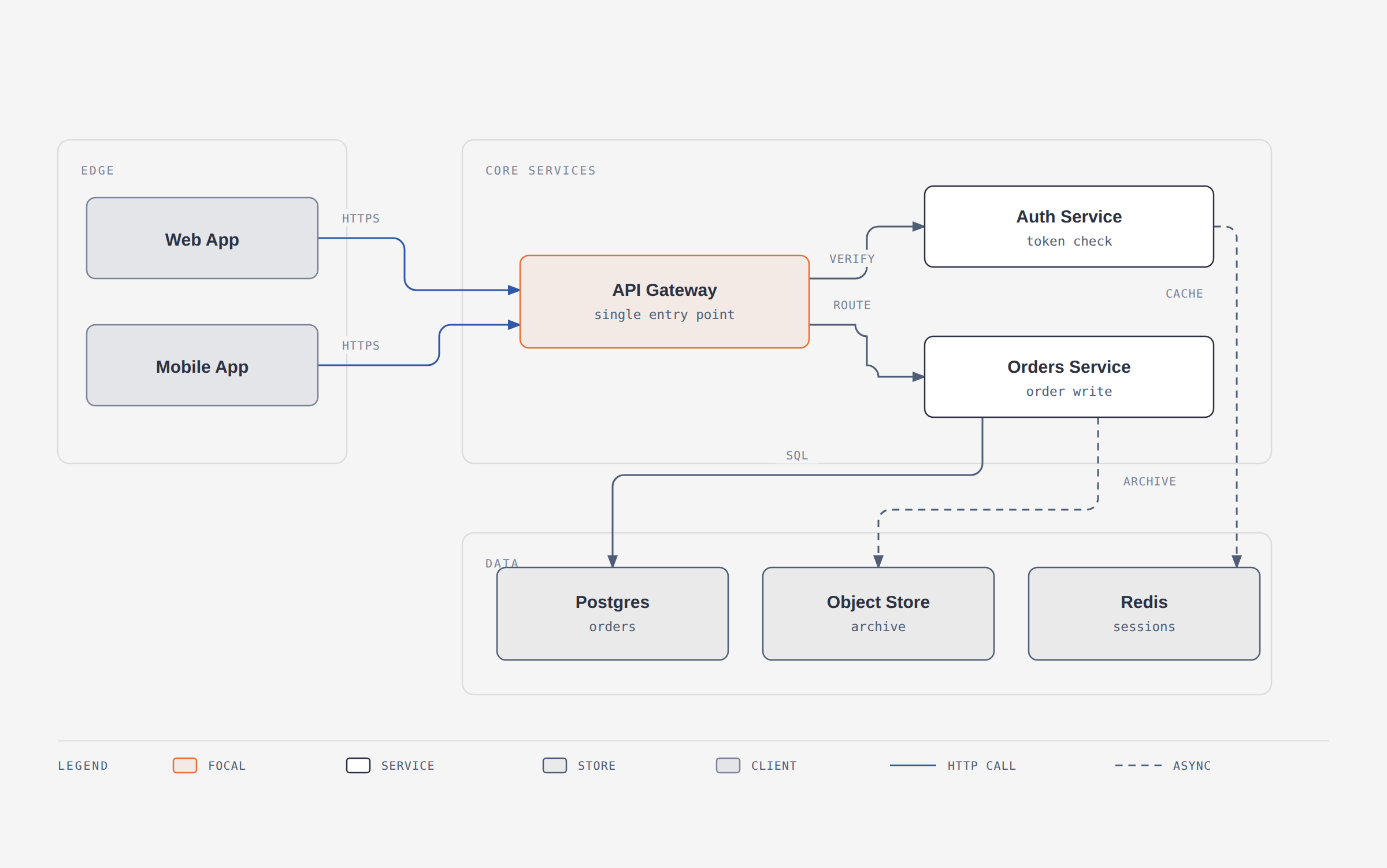
*A 12-node draw.io file redrawn at `balanced` detail for a blog post. The source's six pastel fills became one accent; its hand-dragged coordinates became a 4px grid.*
```
/diagram-design:import platform.drawio
/diagram-design:import platform.drawio --size=slide-16x9 --detail=simplified --audience=executive
/diagram-design:import platform.drawio --detail=faithful --format=png --page=all
/diagram-design:import-mermaid README.md --diagram=all
/diagram-design:import-mermaid architecture.mmd --size=slide-16x9 --detail=simplified
```
Or just ask: *"redraw this drawio file for my deck"*, *"make this Mermaid block editorial"*, or *"この Mermaid をスライド用にきれいにして"*.
Reads the common containers draw.io writes — `.drawio`, `.drawio.xml`, `.drawio.png` (embedded diagram), and `.drawio.svg` — including compressed payloads that look like base64 garbage in an editor.
For Mermaid, it accepts `.mmd`, `.mermaid`, and one or more fenced `mermaid` blocks in Markdown. It parses text only: no rendering, JavaScript, browser, network, or followed click targets.
### The four dials
The point isn't conversion, it's **fitting the output to where it's going**. Same source file, three different diagrams:
| Dial | Options | What it changes |
|---|---|---|
| **Format** | `html` · `svg` · `png` · `html+png` | The deliverable. SVG for Figma, PNG for slides, HTML for the web. |
| **Size** | `doc-inline` · `doc-wide` · `slide-16x9` · `slide-4x3` · `social-og` · `social-square` · `print-a4-landscape` · `print-letter-landscape` · `fit` | The `viewBox` **and the type ramp** — a projected slide gets 16px node names, not 12px. |
| **Detail** | `faithful` (≤24 nodes, zoned) · `balanced` (≤12) · `simplified` (≤7) | How much of the source survives, via a fixed degrade ladder — decorations, then duplicates, then leaf clusters, then infrastructure. |
| **Audience** | `engineer` · `mixed` · `executive` | The *wording*, not the count. `Auth Service / JWT · RS256 · :8443` → `Auth Service / token check` → `Sign-in`. |
Every import ends with a **fidelity ledger** — what got merged, collapsed, or dropped. You know the source; you'd notice anyway.
```
Detail: balanced · 12 source nodes → 8 drawn
Collapsed: "Token valid?" decision → edge label on Gateway → Auth
Dropped: 1 sticky note ("legacy path, to be retired") — unconnected in source
Kept in full: the request path (Web/Mobile → Gateway → Orders → Postgres)
```
What never carries over: source or renderer coordinates, source palette, source fonts, draw.io's diagonal connector spaghetti, or Mermaid's automatic layout. What always does: components, relationships, grouping, and direction. See [`references/import-drawio.md`](skills/diagram-design/references/import-drawio.md), [`references/import-mermaid.md`](skills/diagram-design/references/import-mermaid.md), and [`references/output-spec.md`](skills/diagram-design/references/output-spec.md).
---
## Export to PNG / SVG
Diagrams ship as self-contained HTML, but you can export the diagram itself for Figma, slides, or social cards. Use the slash command for your agent:
**Pi:**
```
/export-diagram path/to/diagram.html
/export-diagram path/to/diagram.html --svg-only
/export-diagram path/to/diagram.html --png-only --scale=3
```
**Claude Code:**
```
/diagram-design:export path/to/diagram.html
/diagram-design:export path/to/diagram.html --svg-only
/diagram-design:export path/to/diagram.html --png-only --scale=3
```
Or just ask in natural language:
```
"Export this diagram as SVG and PNG."
"Save my-diagram.html as PNG."
```
- **SVG** — extracts the `<svg>` node and injects Google Fonts so it renders standalone in browsers, Figma, and Illustrator.
- **PNG** — rasterizes the diagram via Playwright at 2× by default. One-time setup: `pip install playwright && playwright install chromium`.
Both formats are diagram-only — editorial cards and headers from `-full` variants aren't included. For a screenshot of the full editorial layout, use your browser's print-to-PDF or full-page screenshot. See [`skills/diagram-design/references/export.md`](skills/diagram-design/references/export.md) for the full procedure.
---
## Architecture
Progressive disclosure. `SKILL.md` is a lean index — it tells the agent how to pick a type and where to look for detail. Every type lives in its own reference file, loaded only when relevant.
```
diagram-design/
├── commands/
│ ├── export-diagram.md — Claude Code export command
│ ├── import-drawio.md — Claude Code draw.io import command
│ └── import-mermaid.md — Claude Code Mermaid import command
├── prompts/
│ ├── export-diagram.md — Pi `/export-diagram` prompt template
│ └── import-mermaid.md — Pi Mermaid import prompt template
├── skills/
│ └── diagram-design/
│ ├── SKILL.md — philosophy, selection guide, checklist
│ ├── references/ — loaded only when a type or primitive is chosen
│ │ ├── style-guide.md — single source of truth for colors + fonts
│ │ ├── onboarding.md — the URL-to-tokens flow
│ │ ├── import-drawio.md — draw.io redraw procedure
│ │ ├── import-mermaid.md — Mermaid redraw procedure
│ │ ├── output-spec.md — format × size × detail level
│ │ ├── export.md — SVG / PNG export + sizing
│ │ ├── type-architecture.md
│ │ ├── type-flowchart.md
│ │ ├── type-sequence.md
│ │ ├── type-state.md
│ │ ├── type-er.md
│ │ ├── type-timeline.md
│ │ ├── type-swimlane.md
│ │ ├── type-quadrant.md
│ │ ├── type-nested.md
│ │ ├── type-tree.md
│ │ ├── type-org-chart.md
│ │ ├── type-layers.md
│ │ ├── type-venn.md
│ │ ├── type-pyramid.md
│ │ ├── primitive-annotation.md
│ │ ├── primitive-sketchy.md
│ │ └── primitive-terminal.md
│ ├── scripts/
│ │ ├── drawio_extract.py — draw.io → structured IR
│ │ └── mermaid_extract.py — Mermaid → structured IR
│ └── assets/
│ ├── index.html — live gallery, tabbed
│ ├── template*.html — scaffolds for new diagrams
│ ├── example-<type>.html — 3 variants × 27 types
│ ├── example-loop-terminal.html
│ ├── example-quadrant-consultant.html
│ ├── example-import-drawio.html
│ ├── example-import-mermaid.html
│ └── example-sequence-oauth*.html
├── scripts/fixtures/
│ ├── sample-flowchart.mmd
│ ├── sample-readme-with-mermaid.md
│ └── sample-adversarial.mmd
└── docs/screenshots/ — images used in this README
```
This keeps the agent's working context tight (only load what you need) and makes the skill easy to extend — drop a new `type-<name>.md` and wire it into the selection guide. The skill ships with 37 reference files covering every diagram type, primitive, and utility.
### Contributing / skin lint
Before submitting a new example, run `python3 scripts/lint-skin.py <your-new-example.html>`.
The repository-wide check `python3 scripts/lint-skin.py --all --baseline` must stay green.
The linter's `a11y` category rejects diagram SVGs without a resolving accessible name,
an empty or misplaced title/description, or unsafe bare `title` / `desc` IDs.
If you touch the draw.io import path, `python3 scripts/verify-drawio-import.py` must also pass —
it drives the real extractor against `scripts/fixtures/sample-architecture.drawio` in all four
container formats and checks the references stay in sync.
If you touch the Mermaid import path, `python3 scripts/verify-mermaid-import.py` must also pass —
it covers all supported grammars, multi-block Markdown, adversarial labels, trust-boundary
behavior, resource caps, named failures, and reference/command wiring.
All pull requests and pushes are automatically validated via GitHub Actions CI (`.github/workflows/ci.yml`).
### What loads when
At startup, the agent sees only the skill name and description. When a request matches, it loads `SKILL.md`; type references are pulled in only when relevant. This keeps the skill fast even with 37 reference files.
| You ask for… | Agent loads |
|---|---|
| "Make me a flowchart" | `SKILL.md` + `references/type-flowchart.md` |
| "Build an architecture diagram" | `SKILL.md` + `references/type-architecture.md` |
| "Onboard this skill to my site" | `SKILL.md` + `references/onboarding.md` + `references/style-guide.md` |
| "Add an editorial callout to this diagram" | `SKILL.md` + `references/primitive-annotation.md` |
| "Give me a hand-drawn version" | `SKILL.md` + `references/primitive-sketchy.md` |
| "Give me a terminal / CLI-window version" | `SKILL.md` + `references/primitive-terminal.md` |
| "Redraw this .drawio file for my deck" | `SKILL.md` + `references/import-drawio.md` + `references/output-spec.md` + the chosen type's reference |
| "Redraw this Mermaid block for my deck" | `SKILL.md` + `references/import-mermaid.md` + `references/output-spec.md` + the chosen type's reference |
| Routine diagram-making (any of the 27 diagrams) | Only `SKILL.md` + that one type's reference |
No matter how many types exist, the agent only reads the one you need. Add a new type tomorrow and nothing else changes.
---
## The design system (in one paragraph)
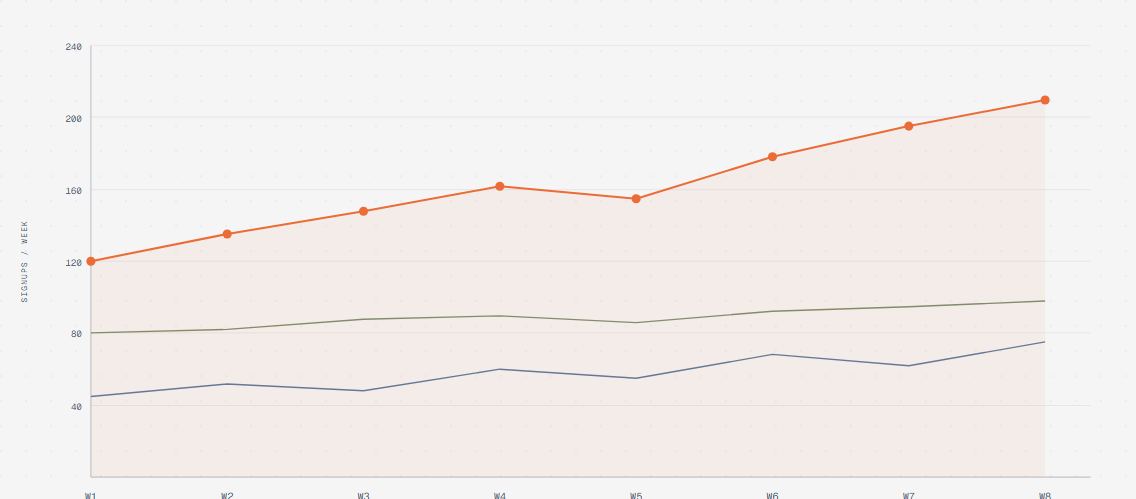
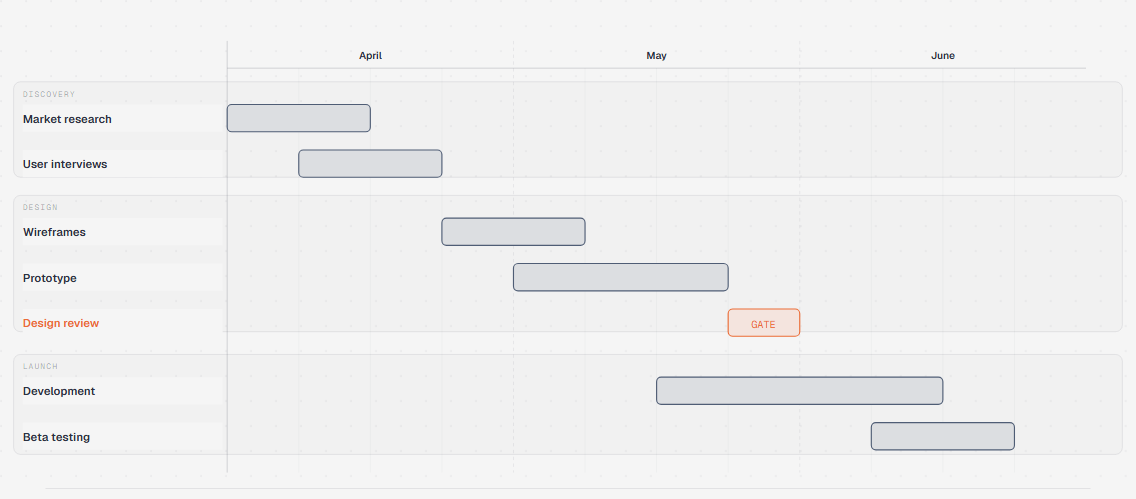
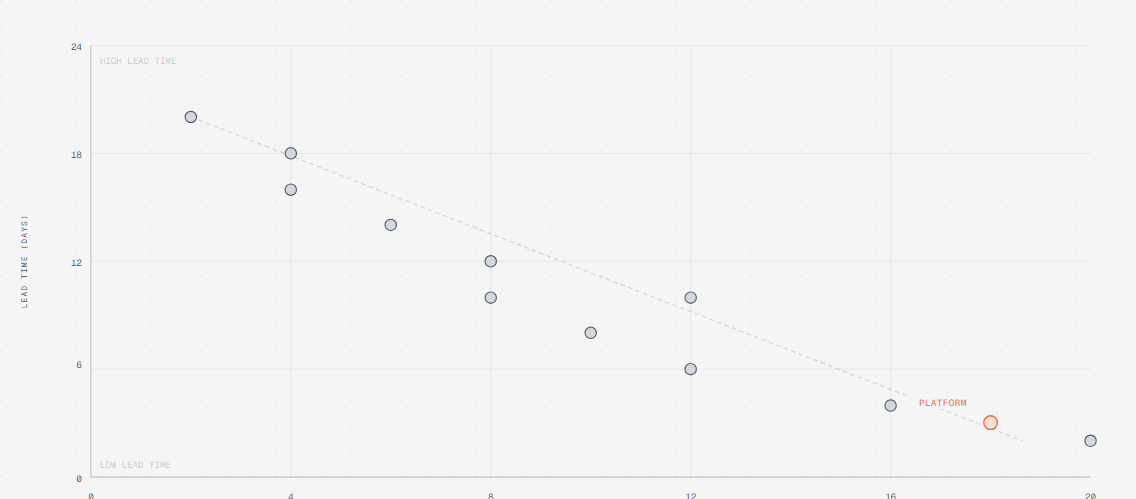
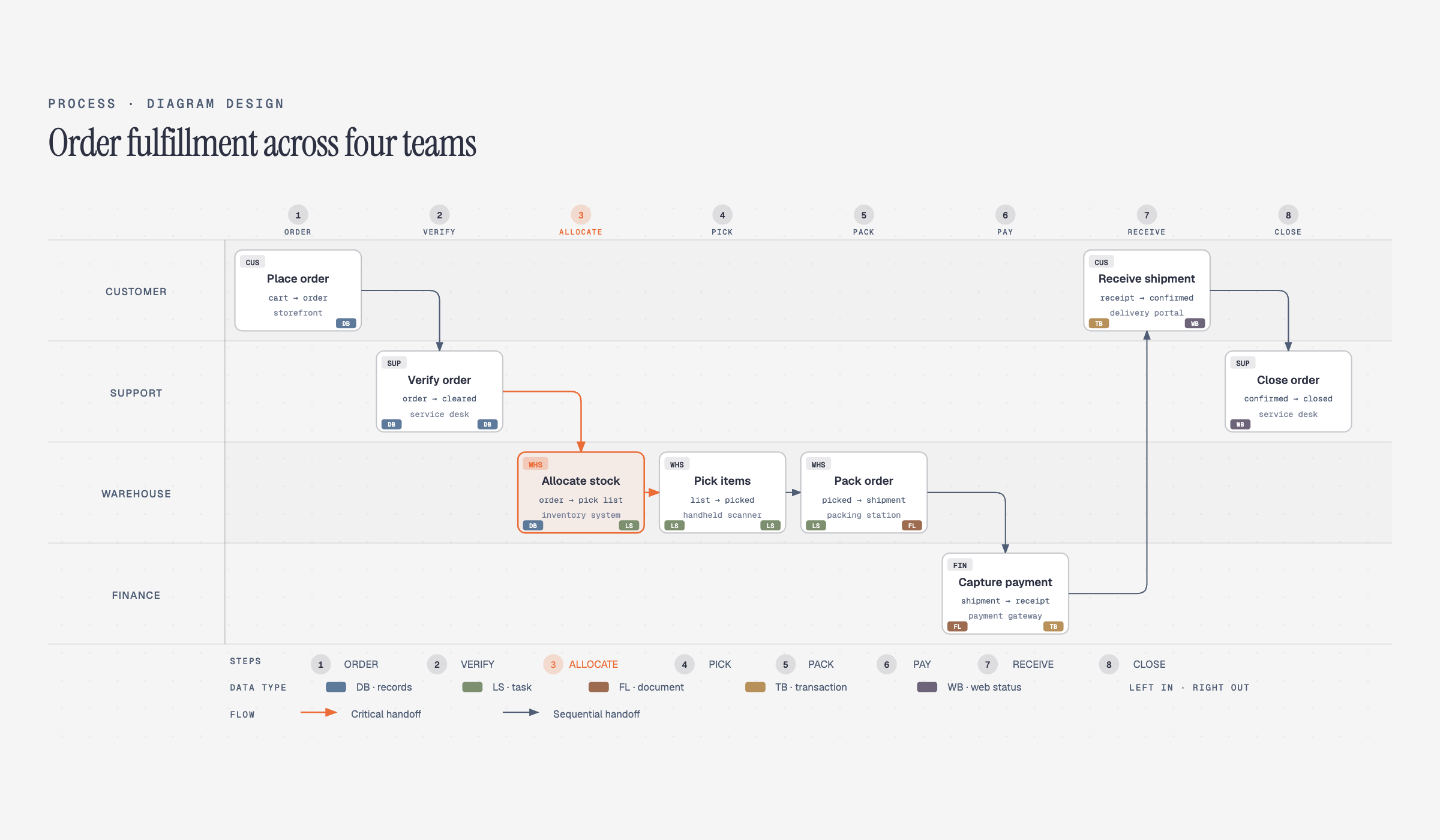
One accent color, 1–2 focal elements per diagram. Three font families: Instrument Serif (title + italic callouts), Geist sans (node names), Geist Mono (technical sublabels). 1px hairline borders, no shadows, max border-radius 10px. Every coord, width, and gap divisible by 4 — non-negotiable, it's what keeps the diagrams from feeling AI-generated. Mono is for technical content (ports, URLs, field types), not a blanket "dev" aesthetic. Coral-tinted focal nodes draw the eye to the 1–2 things that matter. Full spec in [`SKILL.md`](skills/diagram-design/SKILL.md#5-design-system).
---
## Primitives
- **Annotation callout** — italic Instrument Serif + dashed Bézier leader, for editorial asides that sit in the margins. See [`skills/diagram-design/references/primitive-annotation.md`](skills/diagram-design/references/primitive-annotation.md).
- **Sketchy filter** — SVG turbulence + displacement map for a hand-drawn variant. Good for essays, not for technical docs. See [`skills/diagram-design/references/primitive-sketchy.md`](skills/diagram-design/references/primitive-sketchy.md).
- **Icon set** — 55 monochrome IT/cloud icons (laptop, phone, user, server, database, Docker, Kubernetes, AWS, Azure, GitHub, Postgres…) for richer architecture and sequence diagrams. Stroked icons from [Tabler Icons](https://tabler.io/icons) (MIT); brand silhouettes from [Simple Icons](https://simpleicons.org) (CC0). Each icon uses `currentColor` so it inherits the editorial skin or your onboarded brand. See [`skills/diagram-design/references/primitive-icons.md`](skills/diagram-design/references/primitive-icons.md); browse the [gallery](skills/diagram-design/assets/icons.html). Regenerate with `python scripts/build-icons.py`.
---
## When *not* to use this skill
- **Quick unicode diagrams** for tweets or terminal output → wiretext-style skill.
- **Lists of anything** → a table or bullets.
- **Before/after comparisons** → a table.
- **One-shape "diagrams"** — a single box with a label → just write the sentence.
Before drawing, ask: *would a reader learn more from this than from a well-written paragraph?* If no, don't draw.
---
## About
Made by **Cathryn Lavery** — founder of [BestSelf.co](https://bestself.co?utm_source=diagram-design&utm_medium=readme&utm_campaign=github&utm_content=bio). I write about AI, entrepreneurship, and designing nice-looking things at [littlemight.com](https://littlemight.com?utm_source=diagram-design&utm_medium=readme&utm_campaign=github&utm_content=bio) — blog + newsletter.
If this is useful, **star the repo** and come [say hi on X](https://x.com/cathrynlavery).